The white box: the versatile canvas for packaging and presentation
In the vast universe of packaging, one element stands out for its simplicity, inherent elegance, and unrivaled versatility: the white box. Far from being a mere functional container, this packaging solution has consolidated itself as a fundamental pillar in various sectors, from e-commerce to premium gifting and industrial logistics. Its apparent simplicity hides a complexity of options in materials, finishes, and applications that make it a strategic choice for businesses and individuals alike. By understanding the essence and possibilities of the white box, product protection can be optimized, brand enhanced, and user experience improved.
The essentials
- The white box offers maximum versatility and a neutral aesthetic base for any product.
- Various materials exist such as cardboard, wood, and plastic, each with specific properties.
- Personalization is key to transforming a generic white box into a branding tool.
- Sustainability is a crucial factor, with options for recycled and recyclable materials.
- Its choice impacts the perceived value of the product and the unboxing experience.
What is a white box and why its popularity?
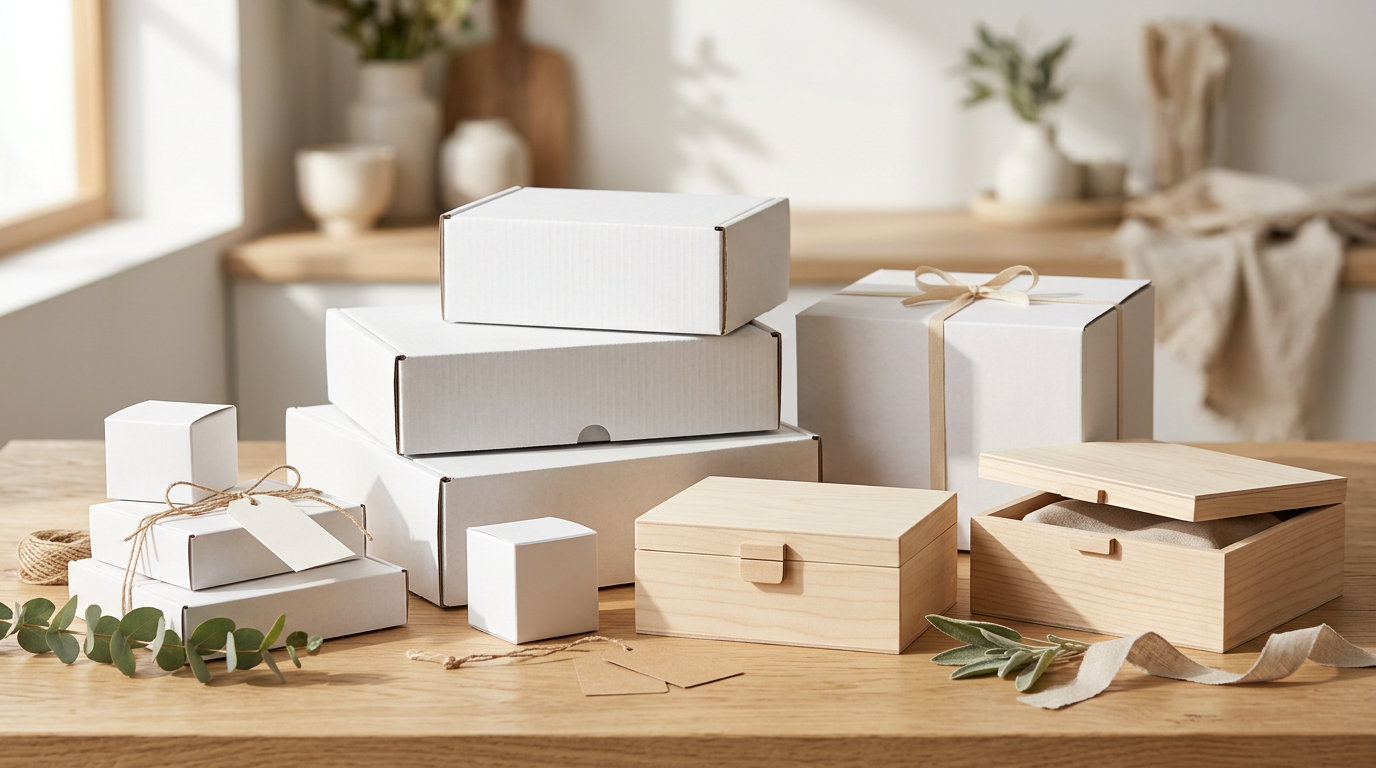
A white box is defined by its color: a predominantly white exterior surface, which can vary in shade from a bright pure white to an off-white or broken white. This fundamental characteristic is not trivial, as the absence of color and distractions allows the product itself or the brand identity to take center stage. Its popularity stems from several factors:
- Aesthetic neutrality: It adapts to any type of product, sector, or event, without creating visual conflicts. It is a perfect background for creativity.
- Perception of cleanliness and quality: White is universally associated with hygiene, purity, and sophistication, instantly elevating the perceived value of the contents.
- Optimization for personalization: It offers an ideal surface for printing logos, complex graphic designs, text, or even for hand decoration. Ink adheres well, and colors stand out vividly.
- Functional versatility: Available in a wide range of sizes, shapes, and strengths, it can be used for shipping packaging, gift boxes, storage, point-of-sale display, etc.
Materials and types of white boxes: beyond cardboard
Although cardboard is the most common material for the white box, the reality is that this denomination encompasses a variety of constructions and materials, each with its own advantages and disadvantages. The choice of the right material directly depends on the intended use, required protection, budget, and aesthetic and sustainability considerations.
White cardboard boxes
They constitute the most extensive and varied category. They are primarily classified by the type of cardboard:
- Folding carton (graphic board): Lightweight and elegant, ideal for consumer products, cosmetics, perfumery, or small items. Allows high-quality printing and precise folding.
- Micro-flute cardboard: Offers greater resistance than folding carton, with an internal wave that absorbs impacts. Commonly used for electronic product packaging, gift sets, or light postal boxes.
- Corrugated cardboard (single or double wall): The standard for shipments and products requiring greater protection. Single wall is versatile, while double wall provides superior robustness for heavy or fragile items. A bleached or coated kraft paper outer layer is usually used to achieve the white finish.
Grammage and Resistance
The grammage of the cardboard (weight per square meter) and the type of flute (in corrugated cardboard) are key indicators of resistance. Higher grammage or a larger flute generally implies greater protection.
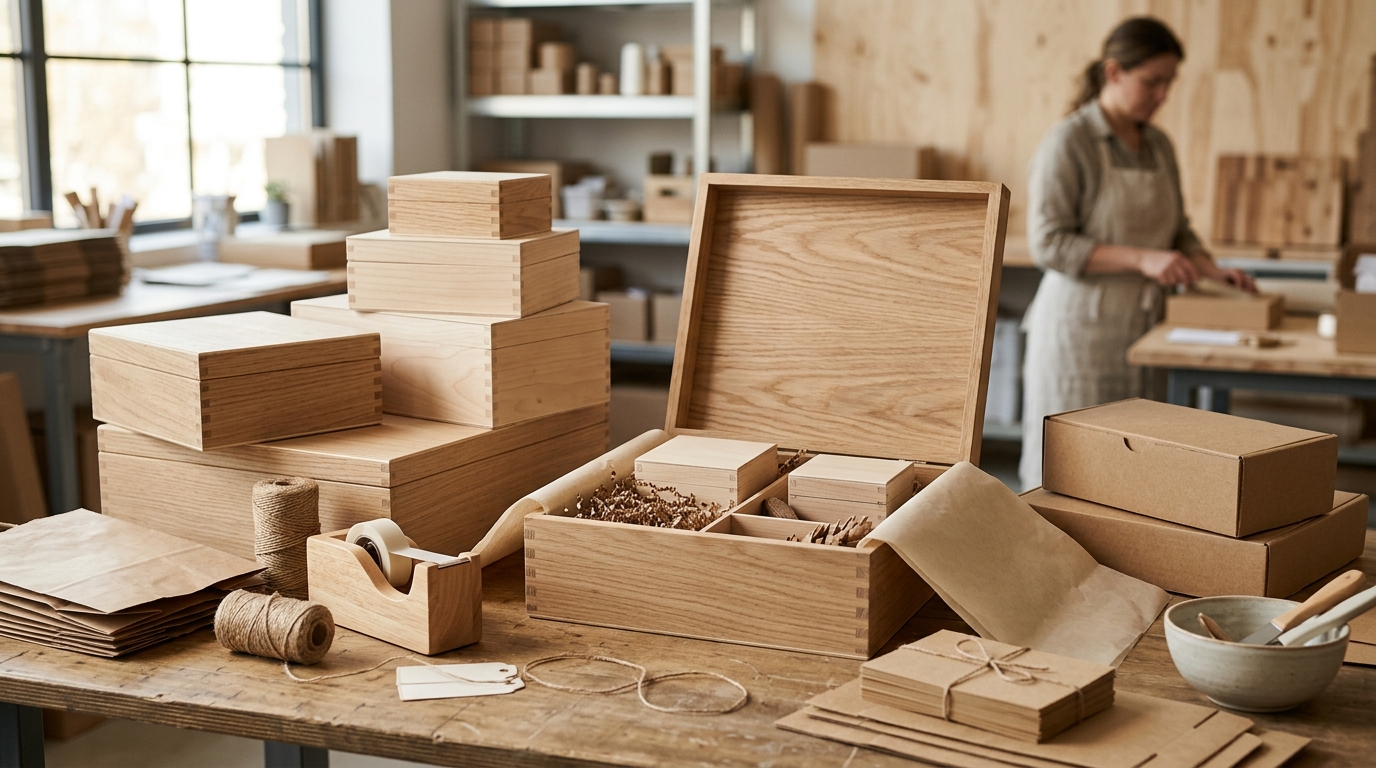
White wooden boxes
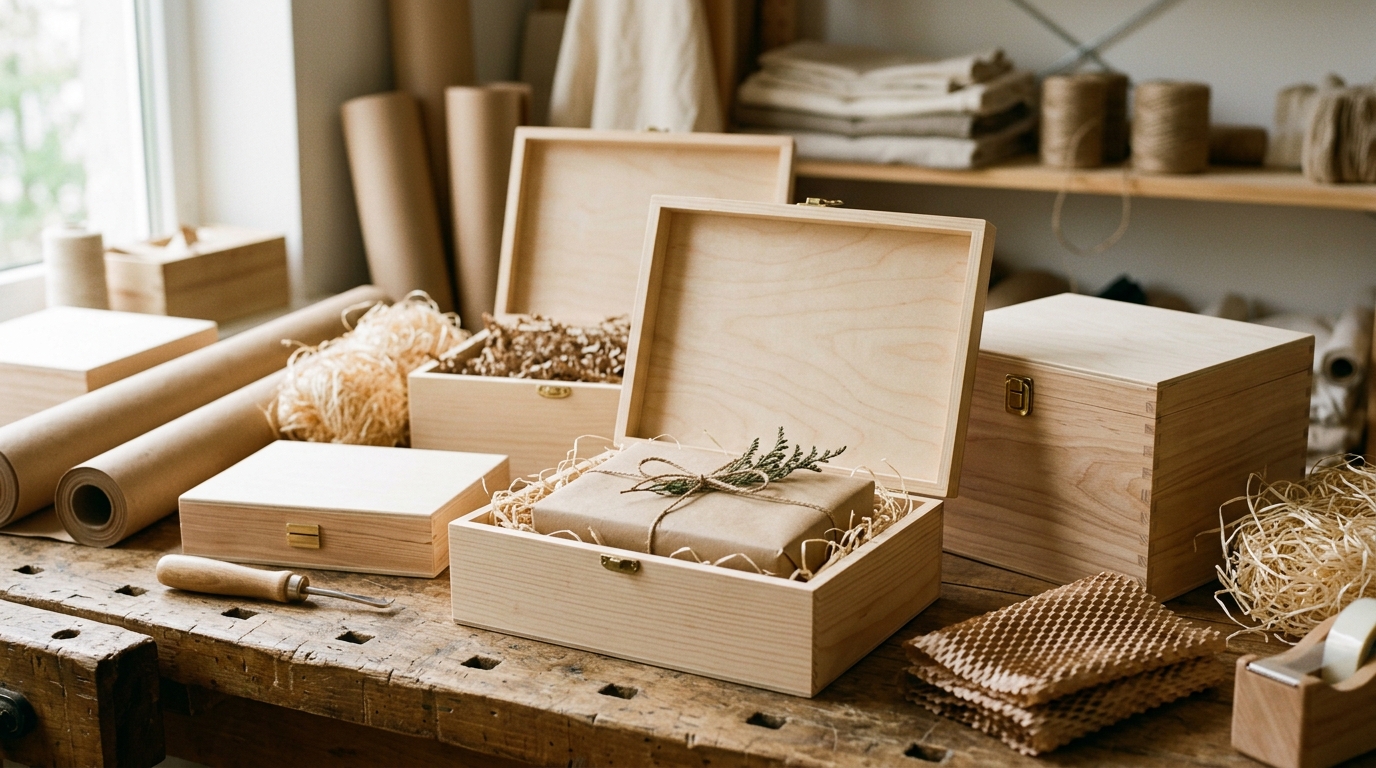
Although less common, custom wooden boxes with a white finish offer a premium and durable packaging solution. They are used for luxury gifts, artisan products, wine bottles, or as components of exclusive sets. The most frequent materials include:
- Solid wood: For maximum robustness and an exceptional finish. Can be painted white or stained with white pigments that highlight the grain.
- Plywood: Offers stability and resistance with a lower weight. The surface can be laminated or painted white.
- MDF (Medium Density Fiberboard): Ideal for smooth and uniform surfaces, very suitable for painting or lacquering in white. Allows precise cuts and engravings.
Wooden boxes often include certifications such as FSC, ensuring sustainable forest management. These boxes, although more expensive, convey a sense of permanence and exclusivity.
White plastic boxes
Plastic boxes are valued for their water resistance, durability, and reusability. They are common in industrial settings, for storage, transport of components, or even as packaging for products that need protection against moisture. Materials like polypropylene or PVC are common. Although not always the most aesthetic option for gifts, their functionality is unquestionable.
Customization capabilities: from blank canvas to brand statement
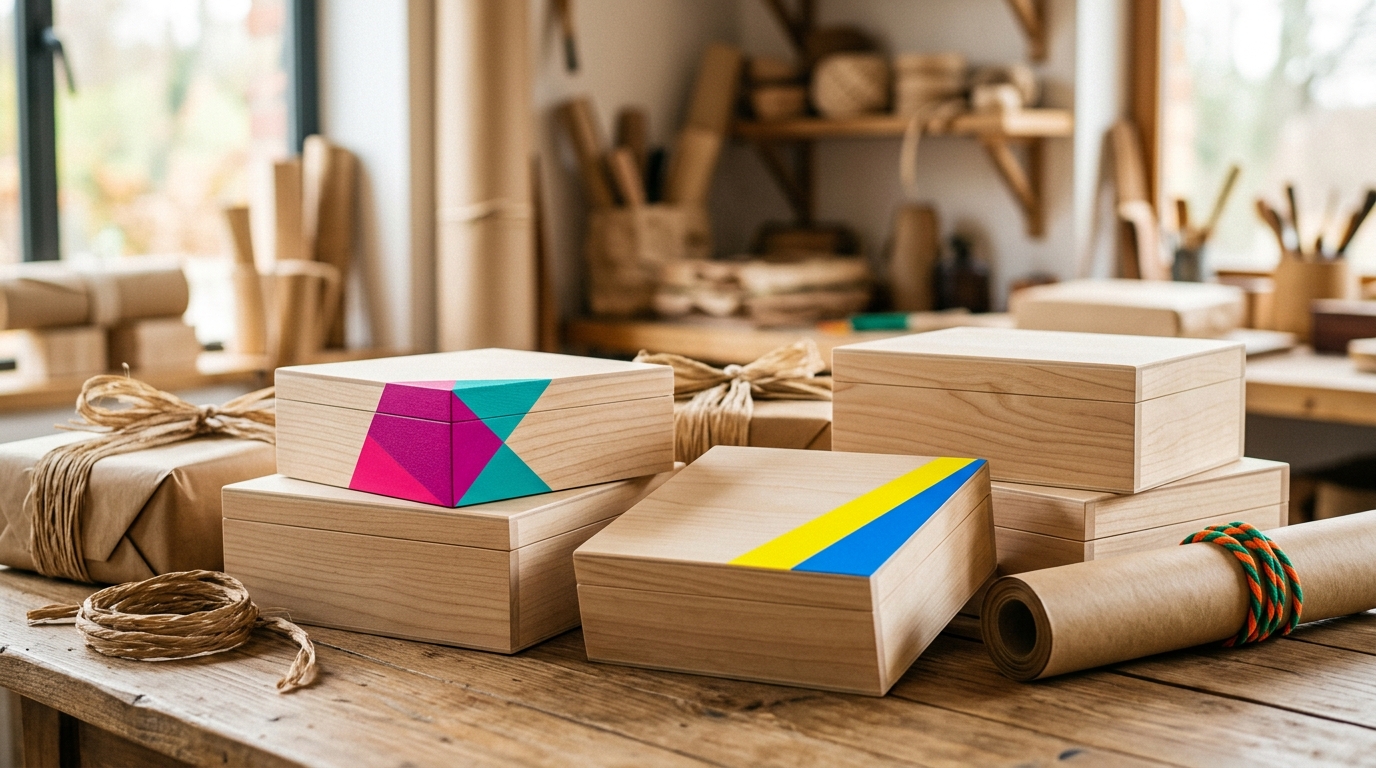
The true magic of the white box lies in its personalization potential. It is a canvas waiting to be transformed to communicate a brand's identity, an event's message, or a product's uniqueness. Customization options are extensive and can be combined to achieve unique effects.
Printing techniques
- Screen printing: Ideal for one or two-color logos or texts, offers a vibrant and durable finish.
- Digital printing: Allows full-color designs, gradients, and photographs, ideal for short runs or variable personalization.
- Offset printing: For large volumes, offers maximum quality and color fidelity on cardboard.
- Flexography: Common for corrugated cardboard, it is a low-cost technique for large runs with simple designs.
Special finishes
Beyond printing, finishes add a premium tactile and visual dimension:
- Embossing / DebossingAdds texture by raising or indenting parts of the design.
- Varnishing / LaminationOffers protection and different effects (gloss, matte, soft-touch).
- Hot Stamping / Foil StampingApplication of metallic or pigmented foils with heat and pressure.
- Laser EngravingPrecision for fine details on wood or cardboard, creating contrast.
Complementary elements
Personalization does not end on the surface of the white box. Accessories such as:
- Ribbons and bows: Add a gift-like touch and can be coordinated with the brand.
- Protective fillings: Tissue paper, wood wool, die-cut foam, or bubble wrap, which protect the product and enhance the unboxing experience.
- Custom labels and seals: An economical option for adding additional information or branding.
- Transparent windows: Allow the product inside to be seen, combining protection with display.
Uses and applications of the white box
The versatility of the white box is reflected in its presence across virtually all sectors and occasions:
- E-commerce and parcel delivery: They are the basis for secure shipments and a professional first impression. They allow for clear branding and a careful unboxing experience, vital for online commerce, as detailed in "What is unboxing? Deciphering the art of unpacking".
- Gifts and events: Indispensable for presenting corporate gifts, welcome kits, wedding packaging, or communion boxes. White acts as a neutral canvas that complements any theme or style.
- Cosmetics and jewelry: The elegance of white highlights the sophistication of products, often with special finishes for a touch of luxury.
- Food and beverages: For gourmet products, pastries, or tasting sets, white conveys hygiene and quality.
- Fashion and accessories: Especially for footwear (as addressed in "Shoe Boxes: Complete Guide to Types and Uses"), clothing, or accessories, where the box can be part of the shopping experience.
- Storage and organization: From home to office, they are practical for storing documents, photos, tools, or office supplies, like those described in "Essential Office Supplies: A Complete Productivity Guide".
Choose the interior
Consider the color and texture of the box's interior. A matching white interior or a contrast with natural kraft or black can significantly improve the perceived quality.
Sustainability and environment: the ecological white box
In a world increasingly aware of environmental impact, the sustainability of the white box is a decisive factor. Fortunately, this type of packaging offers numerous planet-friendly options:
- Recycled materials: Many white cardboard boxes are made with a significant percentage of recycled fibers, reducing the demand for virgin cellulose.
- Recyclability: Most cardboard boxes are 100% recyclable. It is important to verify that the finishes (plastic laminates, inks) do not impede this process or that they are biodegradable.
- Certifications: Look for stamps like FSC (Forest Stewardship Council) for wood and cardboard, or PEFC (Programme for the Endorsement of Forest Certification), which guarantee that the material comes from sustainably managed forests.
- Eco-friendly inks: The use of water-based or vegetable-based inks reduces the emission of VOCs (volatile organic compounds).
- Design for the circular economy: Promote the design of boxes that can be reused by the end consumer or that are easily separable for recycling.
"The white box is not just a container; it is a silent ambassador for the brand, an extension of its commitment to quality and customer experience."
Common mistakes when choosing a white box
Although the white box seems a simple choice, it's easy to make mistakes that can affect product protection, brand image, or budget. Here are some to avoid:
- Underestimating strength: Choosing insufficient grammage or cardboard type for the weight or fragility of the contents, which can result in damage during transit.
- Ignoring internal dimensions: Confusing external with internal dimensions can lead to the product not fitting or, conversely, having too much empty space, requiring more filling material.
- Neglecting print quality: An excellent design can be spoiled by low-resolution printing or dull colors. Investing in good print quality is crucial for branding.
- Not considering the unboxing experience: The white box is just the beginning. The filling, the way it opens, and the internal presentation are equally important for the customer's final impression.
- Forgetting sustainability: Not asking about recycled materials or certifications can miss an opportunity to communicate important brand values to the consumer.
- Not requesting samples: Before large orders, it is essential to request samples to evaluate the size, material quality, finish, and printing in person.
Pay attention to total cost
The initial price of the box is not everything. Consider transportation, storage, and, if necessary, assembly costs. Efficient design can significantly reduce operating expenses.
Tips for selecting the perfect white box
To make the best decision, consider the following aspects:
- Define the purpose: Is it for shipping, gifting, storage, display? This will determine the material and strength.
- Measure precisely: Ensure that the internal dimensions of the box are adequate for your product, including any protective material or filling.
- Evaluate the material: Compare folding carton, micro-flute, corrugated, wood, or plastic based on protection, aesthetics, and budget. A look at a wooden box catalog can be helpful if you are looking for premium options.
- Think about graphic design: Prepare your design files in high resolution and consider how your brand colors will interact with the white background.
- Select finishes: Decide if you need lamination, embossing, hot stamping, or another technique to elevate your product's perception.
- Research sustainability: Prioritize suppliers who offer recycled, recyclable, and environmentally certified options.
- Request quotes and samples: Compare prices from different suppliers and request physical samples to ensure quality and fit.
- Consider logistics: Think about how the boxes will be stored, whether they are shipped flat for assembly or already assembled, and delivery time.
The future of the white box
The white box will continue to evolve with market trends. We will see more innovations in biodegradable and compostable materials, as well as intelligent designs that facilitate assembly and reuse. Personalization will remain a key driver, with increasingly advanced and accessible printing technologies that will allow brands to create unique and memorable unboxing experiences. Its role as a symbol of purity, quality, and versatility ensures that the white box will continue to be an essential component in product packaging and presentation in the future.