The rise of the wine bottle and glass box as a premium gift. Giving a good wine is a classic tradition in both corporate and personal settings, but presenting a wine bottle and glass box drastically elevates the recipient's experience. This format not only delivers
The Rise of the Wine Bottle and Glass Box as a Premium Gift
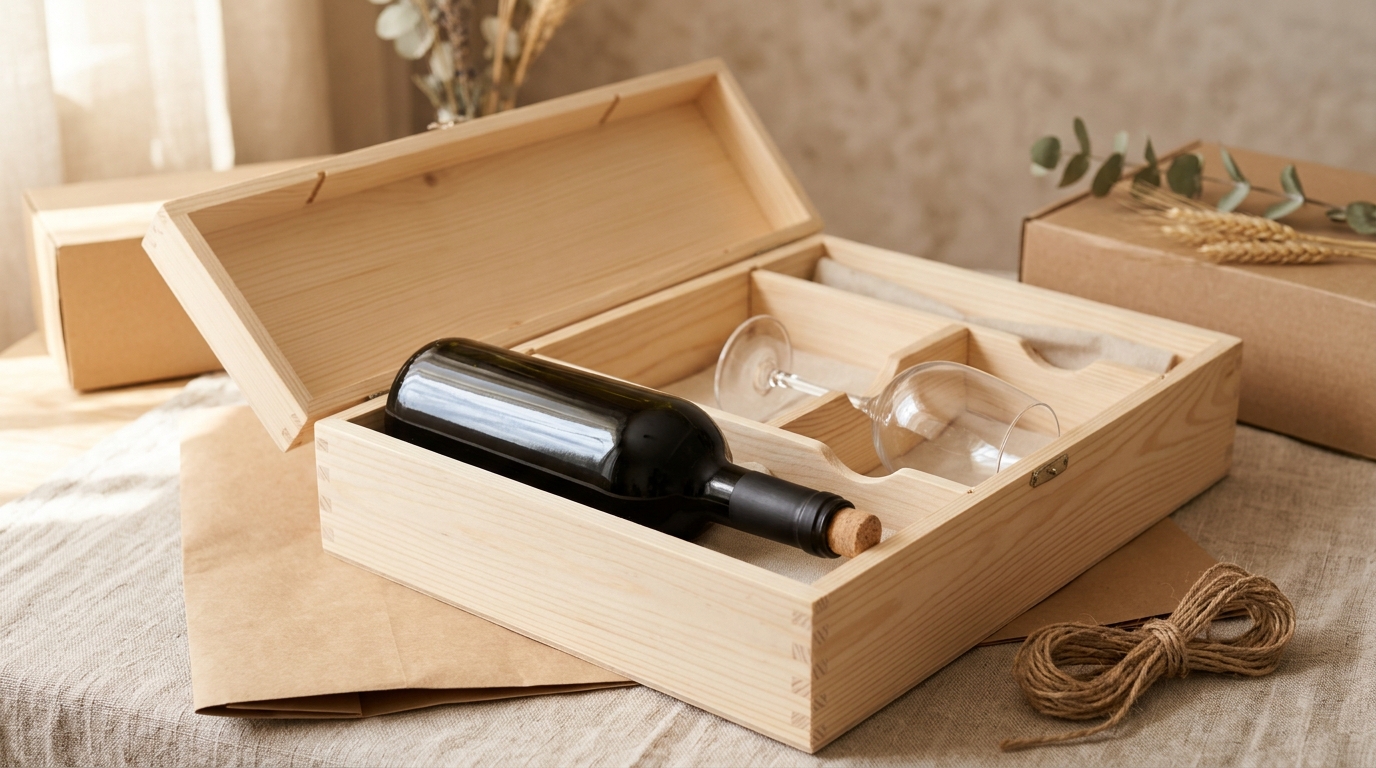
Giving a fine wine is a classic tradition in both corporate and personal settings, but presenting a wine bottle and glass box dramatically elevates the recipient's experience. This format does not merely deliver a product; it provides the complete tasting ritual. Combining both elements in a single wooden case requires meticulous structural planning, as two objects with entirely different shapes, weights, and fragilities are being brought together within the same enclosure.
Key Takeaways
Interior design is critical: the bottle adds weight, while the glass requires extreme protection along the stem.
Certified wood (FSC), such as plywood or pine, offers the best balance of strength, aesthetics, and sustainability.
Internal fastening systems using die-cut wood or kraft cardboard eliminate the need for polluting plastics.
Exterior customization, such as laser engraving or screen printing, turns the packaging into a lasting keepsake.
In today's gourmet packaging sector, presentation is everything. A poorly designed case can lead to catastrophic breakage during transit or a frustrating unboxing experience. Therefore, understanding how a wine bottle and glass box is conceptualized, designed, and manufactured is vital for wineries, event agencies, and companies seeking the perfect gift. The goal is to achieve an impeccable balance between structural security, sustainability, and a visual design that conveys the value of its contents.
Ideal Materials for the Exterior and Interior Structure
The choice of material dictates not only the final appearance of the packaging, but also how it withstands impacts and changes in humidity. In 2026, global trends and regulations demand environmentally friendly packaging, prioritizing renewable resources over single-use plastics.
Wood and Wood Derivatives for the Frame
The outer structure of a wooden box must support the weight of a full bottle (typically ranging from 1.2 to 1.5 kg) while protecting the fragile glass of the goblet. The most commonly used materials in the industry include:
Solid pine wood: Delivers a traditional, rustic, and highly robust appearance. Its natural grain is ideal for high-end gifts, although it significantly increases the total shipping weight.
Plywood (poplar or birch): The gold standard in modern packaging. It consists of thin sheets of cross-bonded wood veneer, providing exceptional mechanical strength with very little weight. It is perfect for gift boxes because it is easy to machine, laser cut, and customize.
MDF (Medium-Density Fiberboard): While it lacks the natural grain of wood, it offers an extremely smooth surface that is ideal for lacquered finishes, paint, or high-definition full-color printing.
FSC Certification
When selecting materials, it is essential to require FSC (Forest Stewardship Council) certified wood. This guarantees that the raw material comes from responsibly managed forests—an increasingly strict purchasing criterion among end consumers.
Interior Fastening Systems
The true technological challenge of a wine bottle and glass box lies inside. A wine glass has a center of gravity very different from that of a bottle, and its bowl and stem are prone to fracturing with the slightest vibration if not held firmly in place.
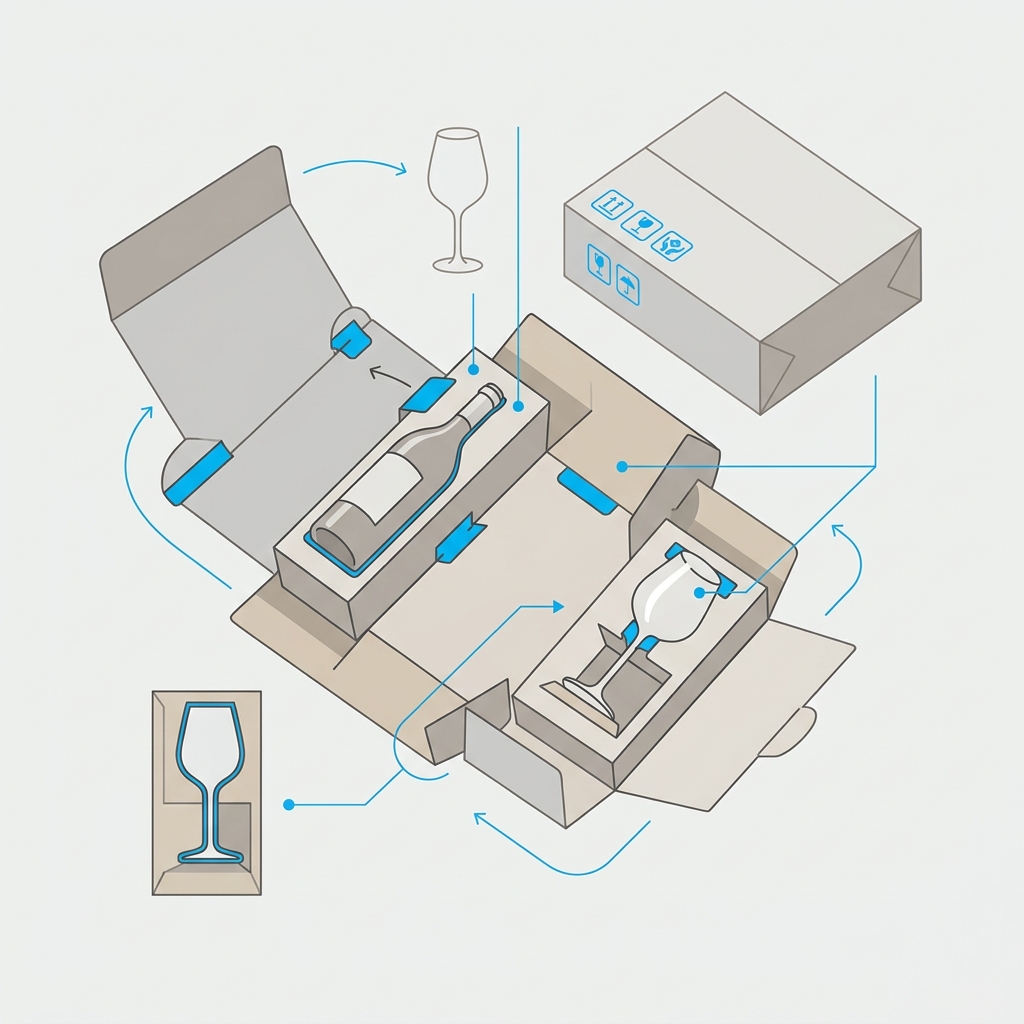
Historically, cut polyurethane foam was the go-to solution. However, to maintain environmental integrity, far more sustainable alternatives are used today. High-grammage die-cut kraft cardboard or plywood dividers are the preferred solutions. These inserts are custom-designed to create cradles that hug the neck of the bottle and the stem of the glass, locking movement along all three axes (X, Y, Z) during transport.
FSCCertified wood
100%Recyclable or Reusable
2-3 kgAverage supported load
Structural Design: How to Protect the Bottle and the Glass
Achieving packaging that works both visually and mechanically is no accident. It requires a detailed packaging engineering process. Dimensions vary significantly depending on the type of wine (a Burgundy bottle is wider and shorter than a Bordeaux) and the type of glass (a large balloon glass for red wines requires considerably more depth than a sparkling wine flute).
Volumetric analysis of components: Precise measurements are taken for the bottle's maximum diameter and total height, as well as the dimensions of the glass (bowl diameter, stem length and thickness, and base diameter).
Space layout: The geometric arrangement is determined. The most common approach is placing both items side by side, but tiered designs (bottle below, glasses above) also exist, resulting in a more compact yet deeper box.
Securing cradle design: Templates for the internal supports are created. The neck of the bottle must be immobilized, as must the stem of the glass. A safety clearance of at least 10–15 millimeters should be left between the items and the outer walls of the wooden box.
Drop and vibration testing: Prior to mass production, the prototype undergoes impact testing simulating courier service conditions to ensure that no items collide with one another.
Any company looking for these solutions is strongly advised to first review a standard wooden box catalog, as adaptable generic die-cuts are often available, cutting the cost of designing from scratch without compromising structural safety.
Custom wooden boxes
Discover our wooden boxes for packaging, hospitality, events and more. In-house manufacturing and full customisation.
The perceived value of a wine bottle and glass box multiplies when the right customization techniques are applied. The outer container serves as a blank canvas to convey corporate identity, commemorate a special event, or highlight the winery's brand. The natural, porous surface of wood accommodates a wide range of decorative techniques.
Laser engraving
Lightly burns the surface of the wood, creating a dark, shallow relief. It is permanent, elegant, and ideal for minimalist logos.
Traditional screen printing
Applies flat, solid ink colors directly onto the wood. Ideal for matching exact corporate brand colors (Pantone).
Direct digital printing (UV)
Sprays ink that cures with ultraviolet light, making it possible to print full-color photographs or complex gradients directly onto the lid of the box.
Hot stamping (Foil stamping)
Applies a metallic foil (gold, silver, copper) using heat and pressure. It provides an ultra-luxurious finish, commonly seen on reserve wines.
Investing in custom wooden boxes ensures that the packaging is not discarded immediately. Thanks to their beauty and utility, these boxes often find a second life in homes as storage containers, jewelry boxes, or decorative accents, generating lasting brand awareness and recall over time.
The best packaging is not the one thrown away after serving its purpose, but the one the customer chooses to keep and display at home as a valued object.
Common Mistakes When Choosing This Type of Packaging
Designing packaging that holds both liquids and fragile glassware comes with inherent risks. When sourcing a wine bottle and glass box, inexperienced buyers frequently make calculation errors that can spoil the entire experience.
Excessive Clearance and Breakage Risk
The most critical mistake is leaving too much empty space inside. If the glass can shift more than a couple of millimeters during transport, cumulative vibration will eventually snap the stem, even without a direct impact to the box.
Another frequent oversight is ignoring different bottle shapes. A box designed with fixed inserts for Bordeaux bottles (cylindrical with high shoulders) will not accommodate Burgundy bottles (wider at the base with sloping shoulders). Similarly, the diameter of the glass is crucial; forcing the lid closed over a balloon glass that protrudes beyond the rim of the box will cause the glass to shatter the moment pressure is applied. Much like the design of wine and cheese gift boxes, modularity and respecting each product's dimensions are key to successful packaging.
The Unboxing Experience and Its Added Value
Opening a wooden box elicits a psychological response deeply rooted in the perception of quality. The sound of the sliding wooden lid gliding along its grooves, the natural aroma of pine or poplar, and the neatly organized reveal of the wine bottle resting alongside its glass create a narrative of exclusivity. This opening ritual elevates the perceived value of the wine well beyond its retail price.
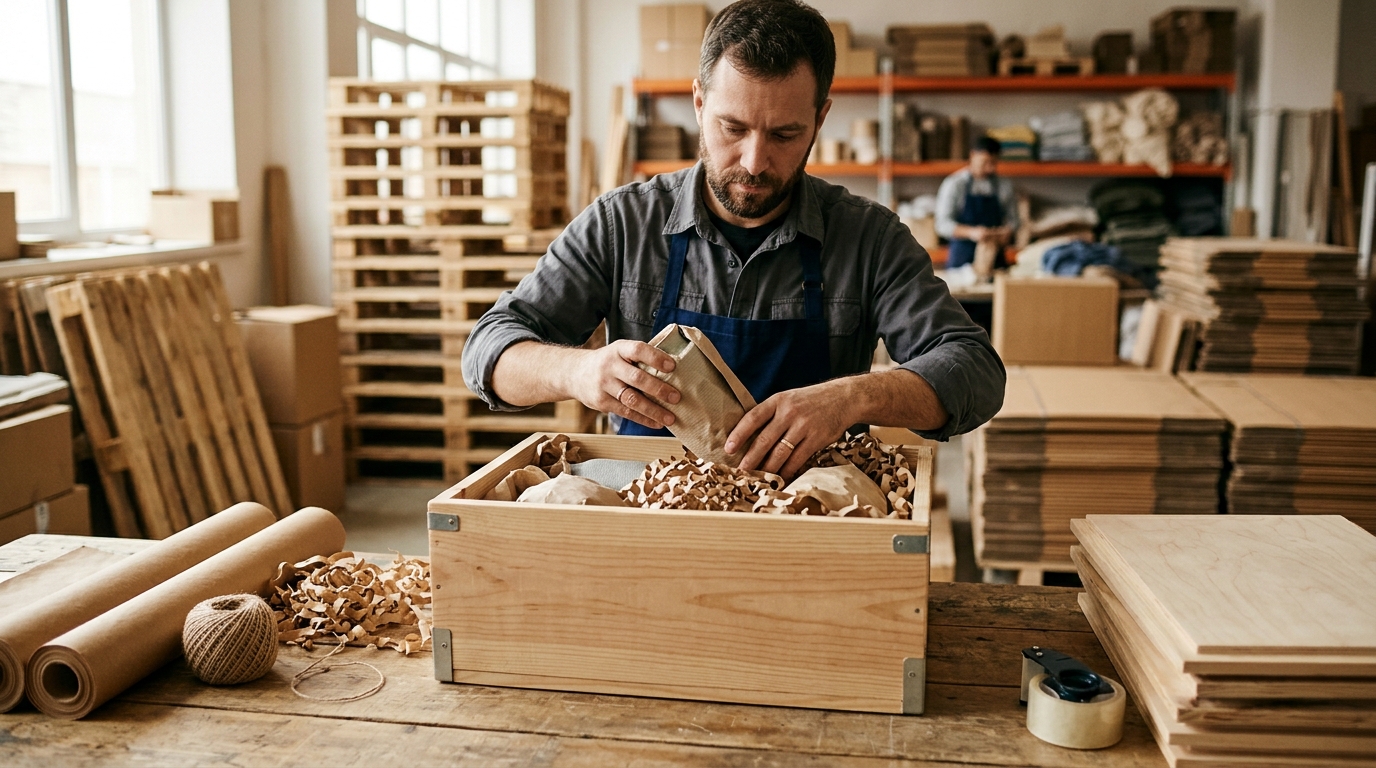
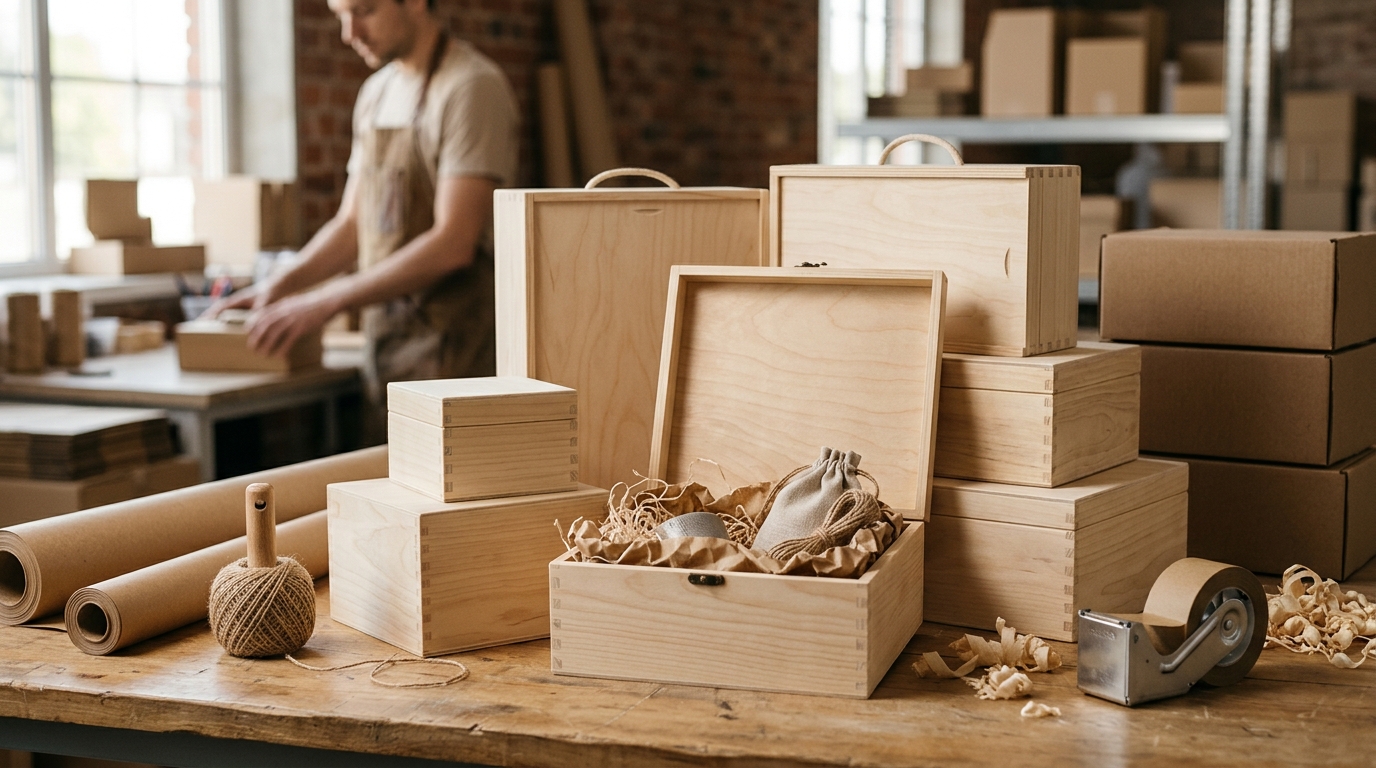
To enhance this experience, some designs incorporate decorative wood shavings beneath the items—providing a rustic touch and an extra layer of cushioning—or linings made of fabric, tissue paper, or velvet. Furthermore, the underside of the lid offers a strategic spot to include a tasting note card, the winery's backstory, or a corporate greeting, adding an intimate, personal layer of customization.
Frequently Asked Questions
What type of glass is recommended for these boxes?
Generally, a universal tasting glass (tulip-shaped) or a standard medium-sized red wine glass is recommended. Large-volume glasses, such as Burgundy balloon glasses, require excessively deep boxes, increasing packaging and volumetric shipping costs. It is essential to use glasses with adequate wall and stem thickness to withstand logistical handling.
Are these boxes safe for parcel shipping?
Yes, provided they feature the proper internal engineering. While the outer wooden box is highly resistant to impacts, the real protection comes from the internal cradles and dividers. For e-commerce shipments, an outer corrugated cardboard shipper is also required in addition to the wooden box to absorb shocks from conveyor belts.
Can the same box be used for any wine bottle?
Not necessarily. While there are standard designs configured to accommodate the most common formats (75 cl Bordeaux and Burgundy), bottles with unique silhouettes, tapered shapes, or wider diameters (such as certain sparkling wines) will require custom-made boxes with tailored internal inserts.
Is a sliding-lid box less expensive than a hinged-lid box?
Sliding-lid boxes are generally more economical and faster to produce, as they do not require metallic hardware. Boxes with hinges and front latches provide a more classic, premium look, but the cost of the mechanical components and the additional assembly labor increases the final price of the packaging.
How does the weight of the box affect logistics shipping costs?
Weight is a critical factor in logistics. Opting for solid woods like thick pine can add over 1 kg to the empty box's weight. Because of this, poplar plywood has become the modern industry favorite: it delivers the rigidity and appearance of natural wood while reducing the weight to a fraction, significantly optimizing parcel carrier rates across weight tiers.