The Art and Science of eCommerce Packaging: Beyond the Box
The Essentials
- eCommerce packaging is key for customer experience, product protection, and brand identity.
- It must balance protection, aesthetics, efficiency, and sustainability.
- Personalization ranges from structural design to finishes and void fill materials.
- Material choice (cardboard, wood, fillers) impacts perception and the environment.
Why Packaging is Crucial in eCommerce?
- Guaranteed ProtectionEnsures the product arrives in perfect condition, minimizing returns and complaints.
- Brand ExperienceReinforces the business's identity and values through its design and presentation.
- Customer LoyaltyA memorable unboxing can generate loyalty and word-of-mouth recommendations.
- Additional MarketingUnboxing photos and videos on social media act as free advertising.
- Logistics OptimizationAppropriate packaging can reduce shipping costs and storage space.
The "Unboxing Experience": Key to Engagement
Types of Materials and Solutions for eCommerce Packaging
Cardboard and its Derivatives
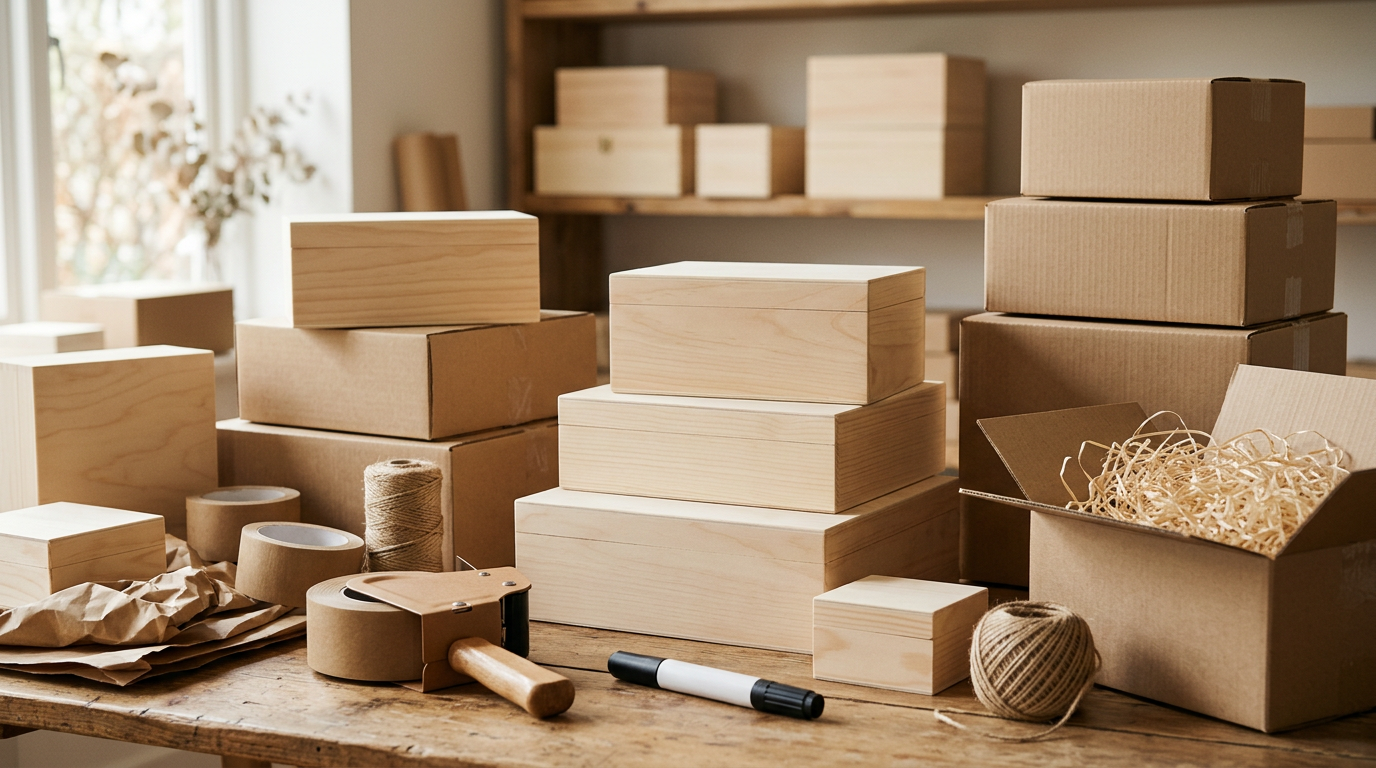
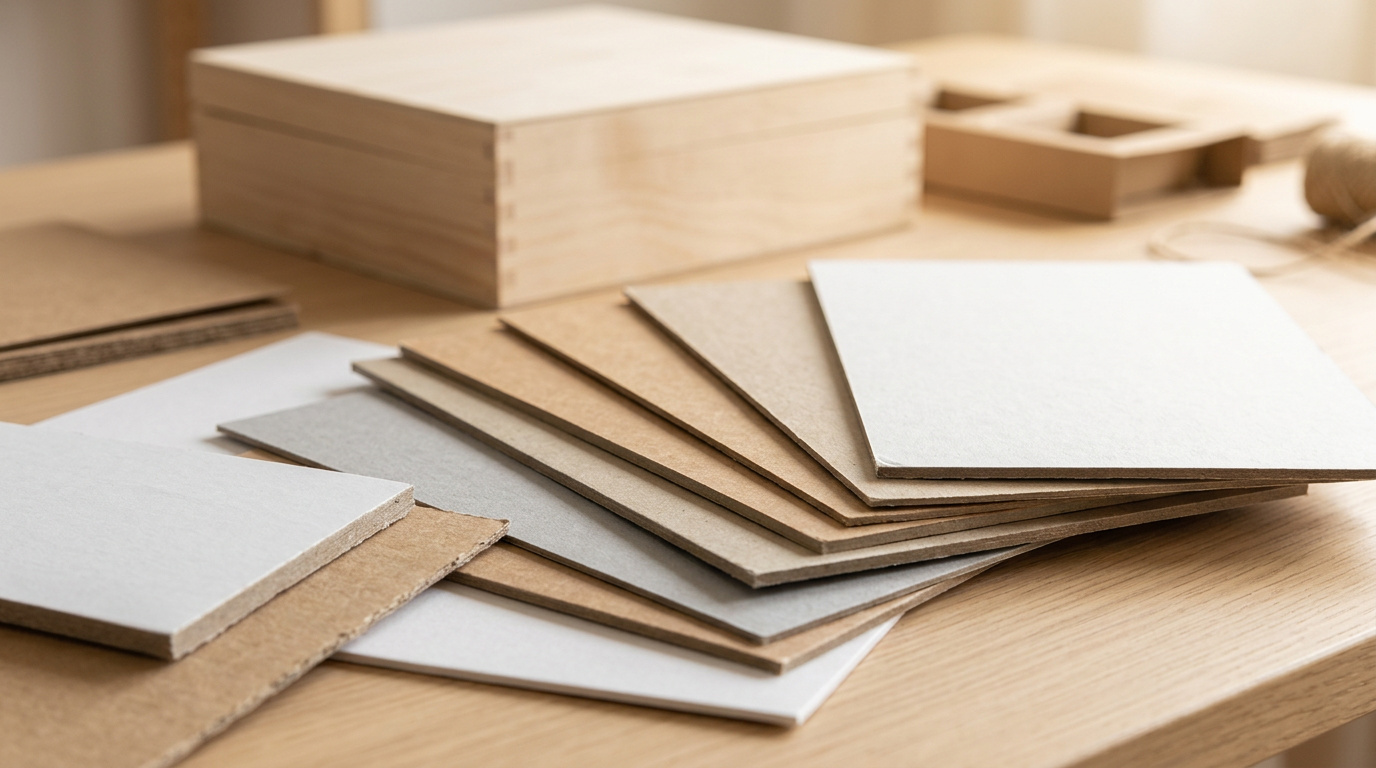
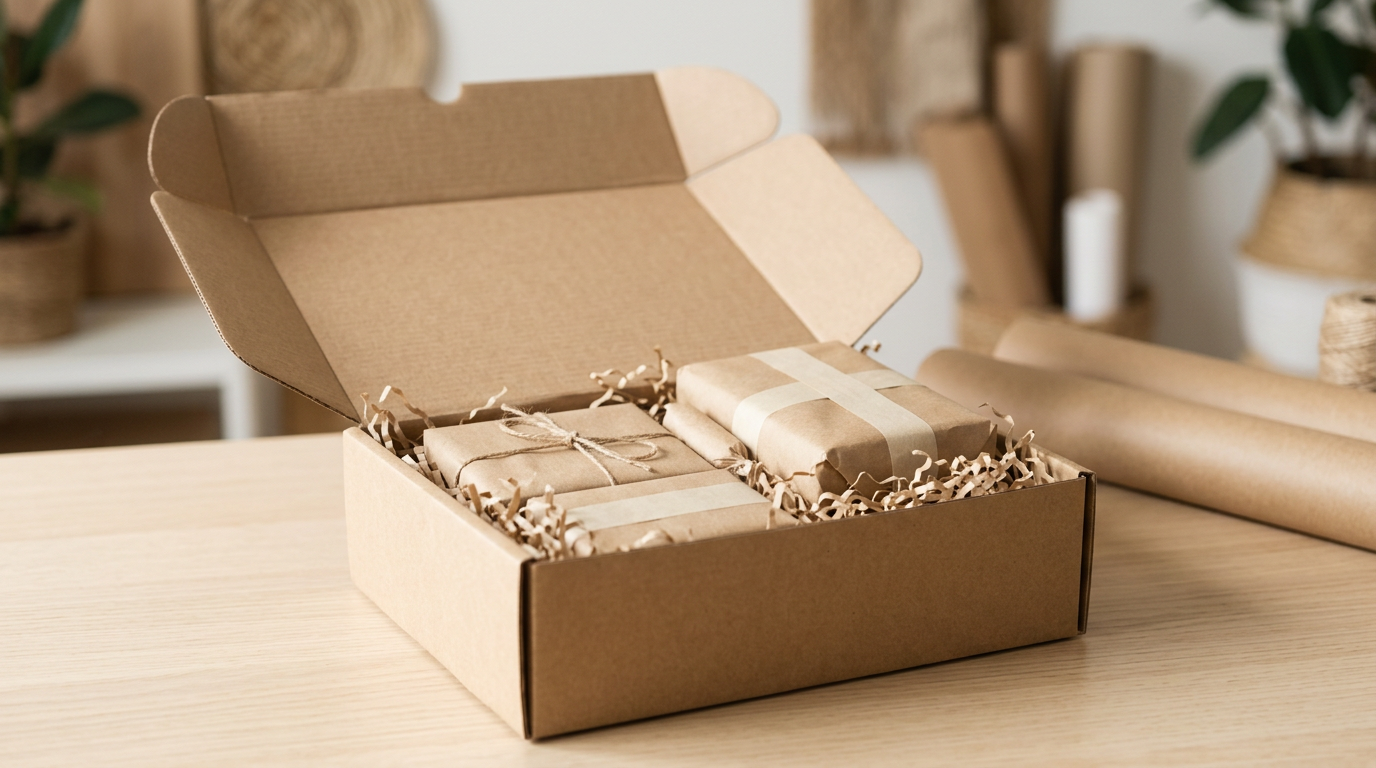
- Corrugated Cardboard: Ideal for shipping boxes due to its impact resistance and cushioning capacity. Available in various strengths (single, double, triple wall) and flute types. Kraft cardboard, with its natural look and high strength, is a popular choice often associated with sustainability.
- Paperboard: Used for smaller product boxes or for secondary packaging within a shipping box. Allows for high-quality printing and more sophisticated finishes.
- Cardboard Inserts and Trays: Custom-designed to hold and protect specific products inside the box, preventing movement and breakage.
Key Fact
Recycled and recyclable cardboard is a sustainable option that resonates positively with today's consumer, who is increasingly aware of environmental impact.
Wooden Boxes and Related Materials
- Solid Wood: For high-value gift boxes, gourmet products, or items requiring extreme robustness. It can be pine, spruce, beech wood, etc., often FSC certified, which guarantees responsible forest management.
- Plywood: A lighter and often more economical alternative to solid wood, maintaining high strength. Ideal for larger shipping boxes or reusable cases.
- MDF (Medium-Density Fiberboard): Offers very smooth surfaces for high-quality finishes, painting, or lining. Used for elegant presentation boxes or internal structures.
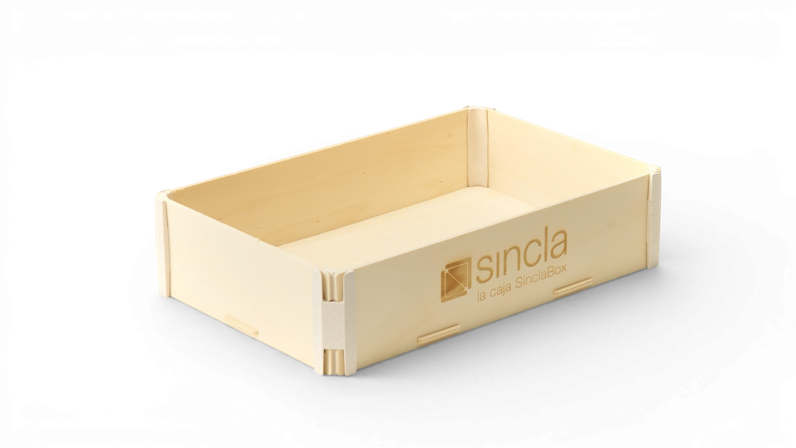
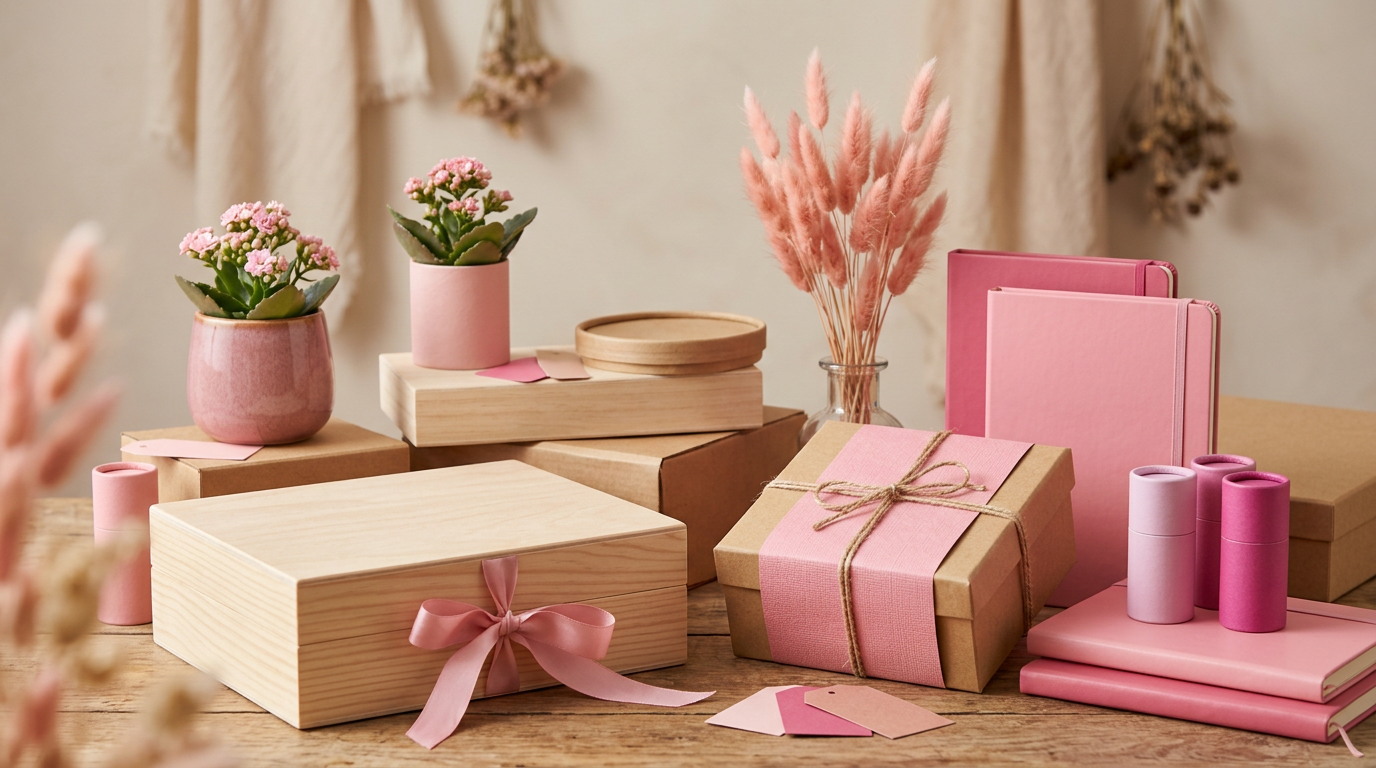
- Custom Wooden Boxes: The possibility of customizing these boxes with engravings or screen printing makes them a powerful medium for branding. For more information on customization options, you can consult the article on custom wooden boxes.
Void Fill and Internal Protection Materials
- Wood Shavings: Eco-friendly, aesthetic, and excellent for delicate or gourmet products.
- Shredded/Tissue Kraft Paper: Provides cushioning and an elegant touch. Tissue paper adds a layer of luxury.
- Bubble Wrap: Although not the most sustainable option, it is very effective for fragile products. Recycled or recyclable versions can be found. For effective use, it is advisable to read the complete guide to bubble wrap.
- Polystyrene Fill (Chips): Lightweight and cushioning, although its environmental impact is often a concern. Biodegradable starch options are available.
- Custom Foam: For high-value products or complex shapes, custom-cut foam (EVA, PE, PU) offers maximum protection and impeccable presentation.
Other Complementary Elements
- Ribbons and Cords: A cord or a custom fabric ribbon can add a sophisticated finishing touch.
- Labels and Seals: Reinforce the brand and seal the packaging.
- Thank You Cards: A personal touch that enhances the customer experience.
- Samples or Small Gifts: Surprises that delight the customer and encourage future purchases.
Personalization and Finishes: Making a Difference
Printing and Engraving Techniques
| Technique | Description | Advantages | Typical Uses |
|---|---|---|---|
| Screen Printing | Ink transfer through a stretched mesh. | Vibrant colors, durability, cost-effective for large runs. | Logos, text on cardboard, wood or fabric boxes. |
| Digital Printing | Direct from a digital file, without plates. | High resolution, ideal for complex designs and short/medium runs. | Cardboard boxes, envelopes, labels. |
| Laser Engraving | A laser beam burns the material surface. | Precision, durability, premium and artisanal look. | Wooden boxes, metal, leather, cork. |
| Hot Stamping | Application of metallic or pigmented foil with heat and pressure. | Shiny, luxurious, and tactile finish. | Logos, details on premium boxes, cards, labels. |
| Pad Printing | Indirect ink transfer from a cliche via a silicone pad. | Allows printing on irregular or curved surfaces. | Small promotional products, complex-shaped containers. |
Practical Tip
Don't underestimate the power of a simple custom stamp with your logo. It's an economical and effective option to add a brand touch to standard packaging.
Structural Design and Format
- Self-assembling Boxes: Easy to store and assemble, they reduce time in the packaging process.
- Magnetic Closure Boxes: Provide a luxurious feel and are ideal for gift boxes.
- Die-cut Windows: Allow the product to be visible, useful for aesthetic items.
- Sleeves or Wraps: Add an extra layer of design and protection.
Sustainability in eCommerce Packaging
FSCCertified wood and paper
100%Recyclable (many materials)
BioBiodegradable options
Strategies for Sustainable Packaging
- Minimization: Use just the right amount of material. Avoid excessively large boxes for small products.
- Recycled and Recyclable Materials: Opt for post-consumer cardboard, recycled plastics, or materials that can be easily recycled by the customer.
- Biodegradable and Compostable: Starch-based fillers, paper, corn-based bags.
- Reusable: Design packaging that customers might want to keep and repurpose, such as decorative boxes or storage containers. Wooden boxes, for example, have high reuse value.
- Eco-friendly Inks: Use water-based or vegetable inks instead of chemical inks.
- Logistics Optimization: Efficient packaging reduces shipping volume and weight, decreasing the carbon footprint of transport.
Sustainable packaging is not a cost, it is an investment in brand reputation and customer loyalty.
Common Mistakes in eCommerce Packaging
- Over-packaging or Under-packaging: Too much material is wasteful and unattractive; too little material results in damage.
- Lack of Protection: Products arriving broken or damaged are the fastest way to dissatisfaction. Consider transportation vibrations, drops, and compressions.
- Difficulty Opening: Packaging that requires tools or is complicated to open frustrates the customer.
- Absence of Branding: Not taking advantage of branding opportunities on packaging is lost marketing.
- Ignoring Sustainability: Not considering environmental impact can alienate a growing portion of the customer base.
- Excessive Costs: High-quality packaging doesn't have to be prohibitive. It's vital to find a balance between cost, protection, and aesthetics.
- Inconsistent Message: If the product is premium but the packaging is generic, the perception of value is reduced.
Logistical and Operational Considerations
- Storage: Boxes should be easy to store (folded, stackable) to optimize space.
- Packing Speed: Designs that allow for quick assembly and filling are crucial for high-volume operations.
- Weight and Dimensions: Directly impact shipping costs. Lightweight and compact packaging can generate significant savings.
- Handling: Boxes should be easy for warehouse staff and carriers to handle.
Note
Choosing efficient packaging can reduce shipping costs and the number of returns due to damage, positively impacting business profitability.
The Future of eCommerce Packaging
- Smart Packaging: Integration of technologies such as NFC or QR codes that offer additional information to the customer (product origin, usage instructions, promotions).
- Mass Personalization: The ability to create unique packaging for each customer at scale.
- Innovative Materials: Research into even more sustainable materials, such as biomaterials or edible packaging.
- Augmented Reality: Interactive unboxing experiences through augmented reality applications.