The value of hinged wooden boxes for collections and packaging. Hinged wooden boxes for collections represent the perfect balance between protection, functionality, and premium presentation. Whether for housing limited product series or for
The Value of Hinged Wooden Boxes for Collections and Presentation Cases
Hinged wooden boxes for collections represent the perfect balance between protection, functionality, and premium presentation. Whether housing limited-edition product series, preserving high-value items, or creating memorable unboxing experiences, this packaging format delivers a perceived value that disposable options simply cannot match. In the current 2026 market, consumers particularly appreciate containers that not only provide protection during transport, but also become decorative, functional, and long-term storage items.
Key Takeaways
Hinged lids add an interactive component that elevates the unboxing experience and encourages package reuse.
Plywood and lightweight solid wood are the preferred materials to ensure durability without excessive weight.
Custom interior fittings (foam inserts or die-cut cardboard) are essential for immobilizing and protecting collectible items.
Customization through laser engraving or digital printing turns simple packaging into a collectible object of desire in its own right.
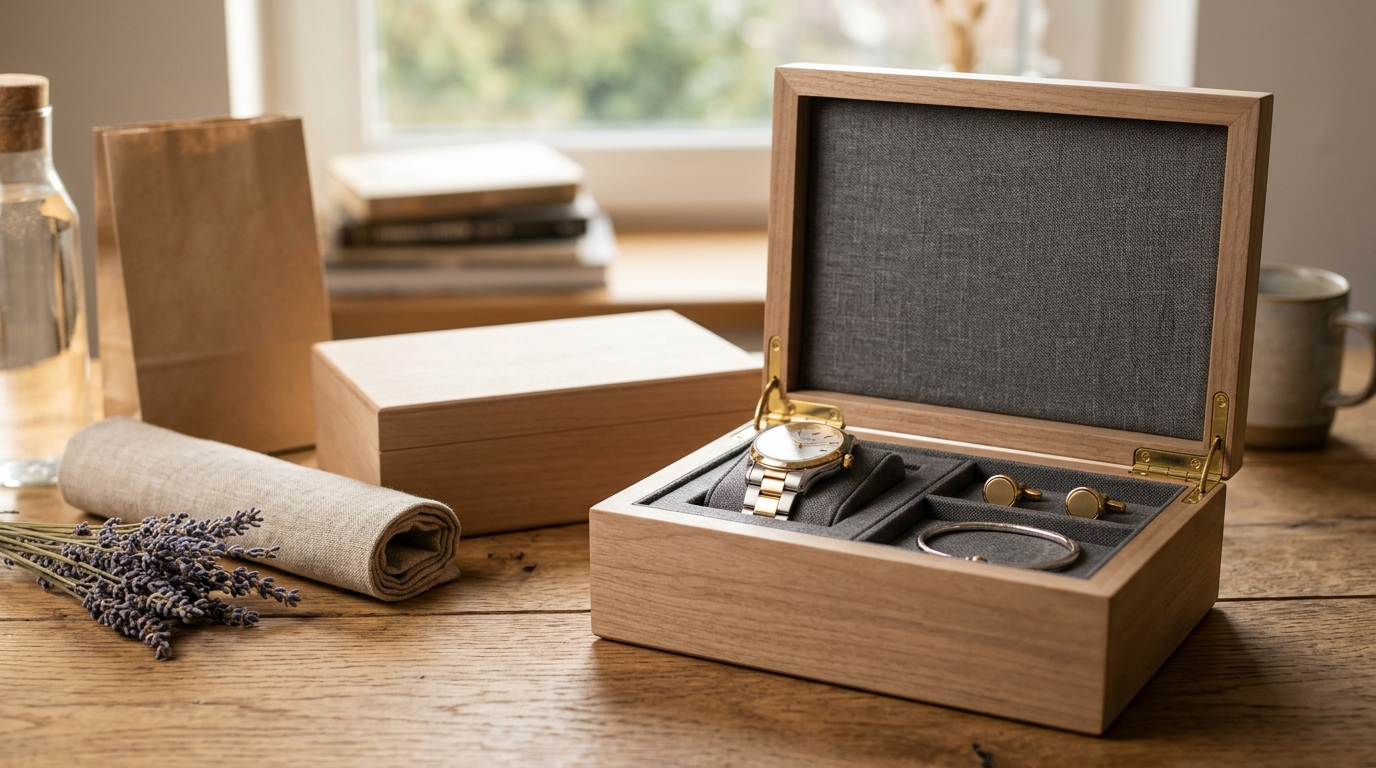
Designing packaging for special editions requires meticulous planning. It is not merely about containing an object, but about framing it. The flip-top opening allows for a front-facing, panoramic display of the product the exact moment the lid is lifted, creating an immediate visual impact. This mechanism is the primary reason why sectors such as jewelry, numismatics, publishing, and fine dining rely on this format for their most exclusive launches.
Why Choose This Rigid Format?
When designing packaging for a premium product, numerous alternatives exist on the market. However, exploring the Advantages of wood over cardboard in packaging helps explain why brands turn to the rigidity and noble character of forest-derived materials. Below are the most notable structural and commercial benefits of these hinged presentation cases.
Extreme DurabilityThey withstand the passage of time, making them ideal for items meant to be preserved for decades.
Ergonomic OpeningThe articulated hardware allows the box to be opened and closed hundreds of times without creasing or wear.
Perceived ValueThe natural weight and tactile quality convey craftsmanship and justify a higher price positioning.
Genuine SustainabilityThey foster the circular economy as end users continually repurpose them in their homes indefinitely.
Materials and Hardware: The Backbone of an Ideal Case
Selecting the core material is the first critical decision when manufacturing display cases for collections. Not all wood types behave the same way under shifting humidity levels or during the precision machining required to seat metal hardware. It is essential to select boards that offer dimensional stability over time, as even minor warping could prevent the closure from fitting properly.
Material
Key Features
Recommended Use
Plywood (Poplar/Birch)
Lightweight, highly stable against moisture, resistant to warping. Smooth surface ideal for printing.
Beyond the body, the hardware serves as the heart of hinged wooden boxes for collections. A loose or sliding lid can jam over time, but a securely mounted metal hinge ensures smooth motion. Available options include butt hinges (visible from the exterior, adding a classic touch), concealed or quadrant hinges (hidden when the box is closed), and continuous piano hinges (ideal for wider cases where the lid's weight must be distributed evenly).
Pay Close Attention to Metal Quality
A frequent mistake in low-cost production runs is the use of hardware made from soft alloys. Over time and repeated use, the pins give way, causing the lid to misalign. For products intended to be opened frequently, it is vital to specify stainless steel or solid brass in the assembly.
Sustainability and Eco-Friendly Design in the Industry
Environmental concerns have reshaped industrial design, and presentation packaging is no exception. Consumers now demand that special series utilize renewable resources from traceable sources. Using wood panels sourced from managed plantations has become an indispensable baseline for any brand seeking a mid-to-high-tier market positioning.
FSC / PEFCCertified wood
100%Recyclable material
0%Single-use plastics
To achieve this zero-plastic goal, industrial designers are replacing traditional synthetic coatings with water-based varnishes and natural stains. Similarly, petroleum-based thermoformed inserts are giving way to far more eco-friendly alternatives, resulting in finished packaging that is either entirely biodegradable or easily disassembled for proper recycling.
Custom wooden boxes
Discover our wooden boxes for packaging, hospitality, events and more. In-house manufacturing and full customisation.
Finishes and Customization: Making a Limited Edition Unique
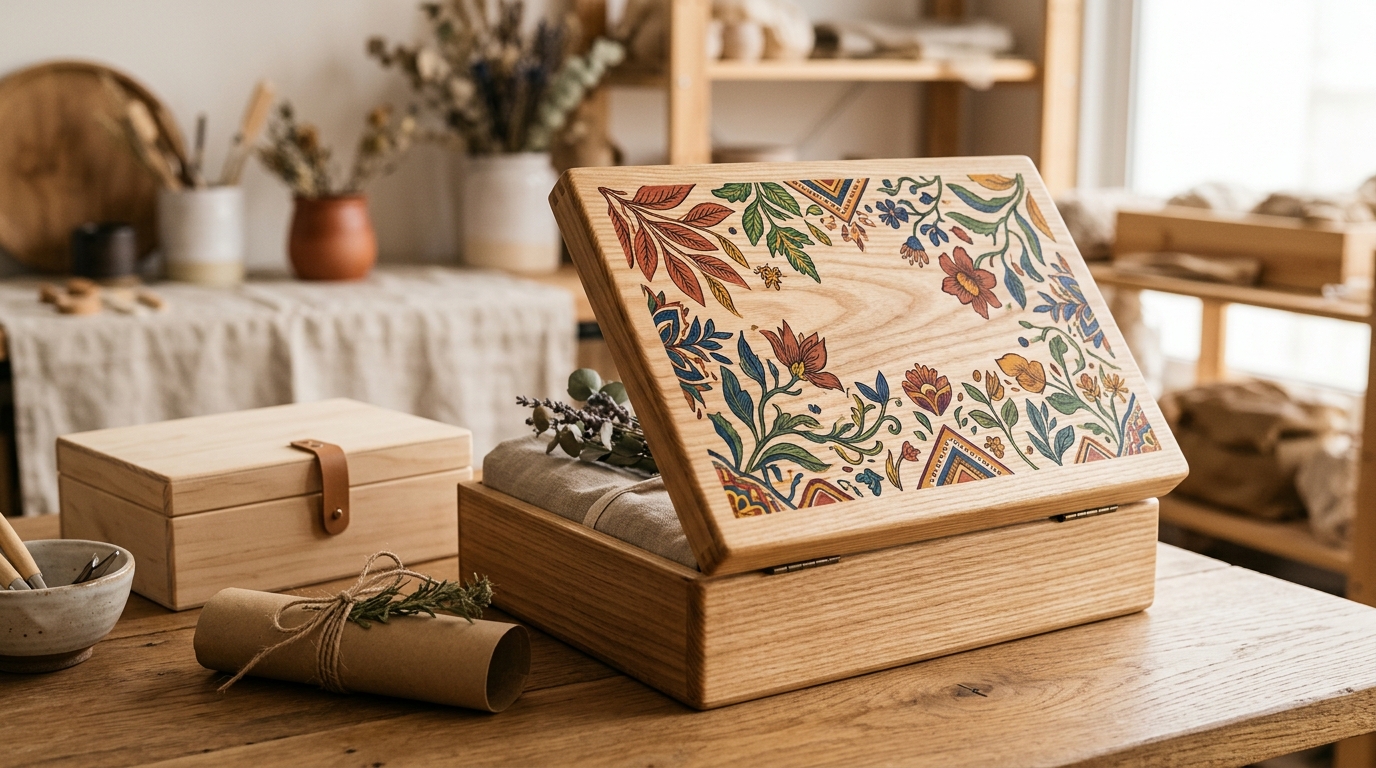
Once the structure and material are established, customization is what elevates a functional container into a work of art. In collectible projects, the logo, edition numbering, or cover artwork are just as crucial as the product held inside. Available finishing techniques range from understated refinement to full-color visual impact.
Laser engraving remains the top choice for conveying artisanal craftsmanship and exclusivity. By lightly burning the material's surface, it produces an indelible intaglio effect that never fades. Conversely, when a collection's artwork requires exact brand pantones or photographic imagery, Color-printed wooden boxes for brands and design utilizing direct UV technology provide striking results, instantly curing the ink directly over the porous substrate.
Combining Techniques
A prominent trend for upscale editions is combining multiple finishing methods. For instance, base-coating the entire lid in a dark tone via screen printing, followed by metallic gold hot stamping to accentuate key elements such as emblems or release years.
Exterior packaging should foreshadow the quality of what lies within; a premium case serves as the ultimate prelude to a collectible item.
Custom Interiors: The Key to Protection and Display
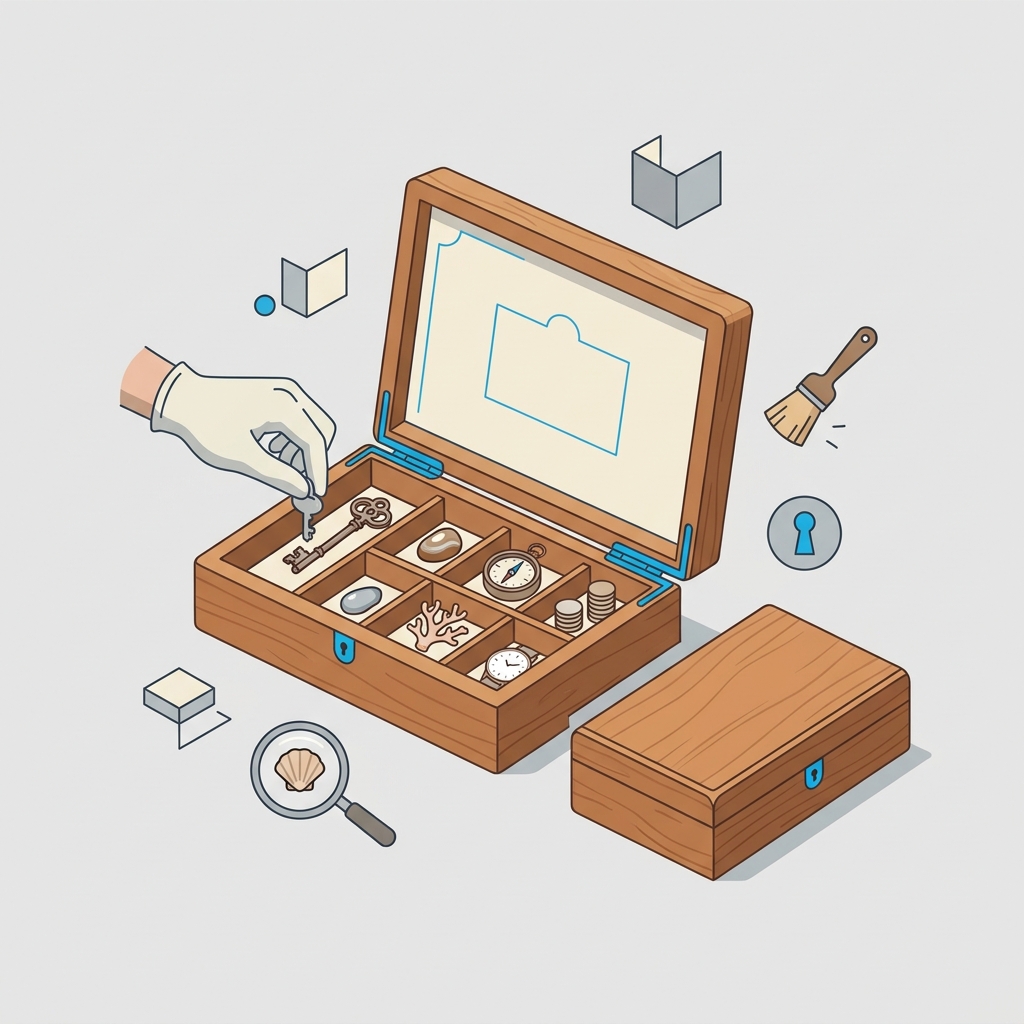
A widespread mistake when planning hinged wooden boxes for collections is overlooking the interior layout. If objects—such as coins, specialty bottles, antique volumes, or timepieces—shift freely, movement during shipping can cause irreversible damage. Furthermore, a disorganized interior diminishes the unboxing experience.
To address this, custom-milled inserts or cradles are engineered to exact dimensions. The choice of interior material depends on the fragility of the product and the project's budgetary requirements.
Volumetric Measurement. The first step involves 3D scanning or measuring every piece in the collection to define the exact footprint and depth each item will require.
Substrate Selection. Options include precision die-cut polyethylene foam (ideal for maximum shock absorption) or sustainable alternatives like folded high-grammage kraft cardboard.
Textile Lining (Optional). For sectors such as fine jewelry or watchmaking, the technical base is frequently lined with velvet, faux leather, or microfiber to prevent micro-abrasions and deliver a plush tactile finish.
Drop Testing. Prior to full-scale manufacturing, vibration and drop testing are imperative to confirm that components stay seated and do not strike the hinged lid under impact.
Notable Industry Applications
The applications for this packaging style span multiple industries seeking to enhance their flagship offerings. A clear example is luxury food and beverage. Utilizing Wine and cheese gift set boxes: gourmet packaging featuring a hinged lid creates impressive gift sets, where the packaging later transitions into a home wine caddy or culinary storage box.
In publishing, classic literary collections or special-edition tabletop RPG manuals are often housed in hinged wooden presentation chests. This format mirrors the binding of an archival volume while shielding paper and covers from dust and UV light. Meanwhile, high-end skincare brands regularly debut holiday gift sets or anti-aging collections in varnished wood cases, emphasizing the natural purity and potency of their ingredients.
The Logistics Challenge
Shipping rigid collectible packaging via parcel networks requires secondary protective outer cartons. To dive deeper into transit protection strategies, consult our guide on How to successfully reduce breakage in e-commerce shipments, which outlines best practices for perimeter cushioning.
Frequently Asked Questions
What type of clasp or closure works best with a hinge?
It depends on the intended end use. For boxes opened frequently (such as cigar humidors or jewelry boxes), recessed magnetic closures along the rim offer effortless access and a sleek aesthetic. For transit cases or high-value editions, metal brief-style latches or hasps (with or without a key) provide extra security and deliver a distinct, reassuring click that enhances the tactile experience.
Can hinged presentation boxes be shipped flat-packed?
While folding rigid packaging alternatives exist, wooden boxes equipped with metal hinges are typically shipped fully assembled from the factory. The precision required to align the lid axis with the base requires specialized machinery. Nonetheless, their uniform, sturdy geometry allows them to be stacked efficiently onto pallets, optimizing warehouse storage compared to irregular packaging shapes.
What maintenance do these boxes require over the years?
Unlike disposable packaging, these pieces are engineered to endure. If the wood has a protective clear coat or varnish, simply dusting it with a dry microfiber cloth is sufficient. For unfinished or untreated timber, avoid extended exposure to direct sunlight and extreme humidity fluctuations, as these can cause the wood fibers to swell or contract, potentially affecting the alignment between the lid and base.
Can modular or reconfigurable interiors be used?
Yes. A favored technique for evolving collections (where owners acquire pieces over time) is building an expansive case fitted with internal side channels. This setup accommodates adjustable dividers or stackable, pull-out trays. As a result, the internal compartment structure can adapt as the collection expands, significantly extending the functional life of the case.
We use our own and third-party cookies to improve your experience, analyze traffic and show relevant advertising. You can accept, reject or customize your preferences.