Labeling Machine: Optimization and Precision in Industrial Packaging
Sincla
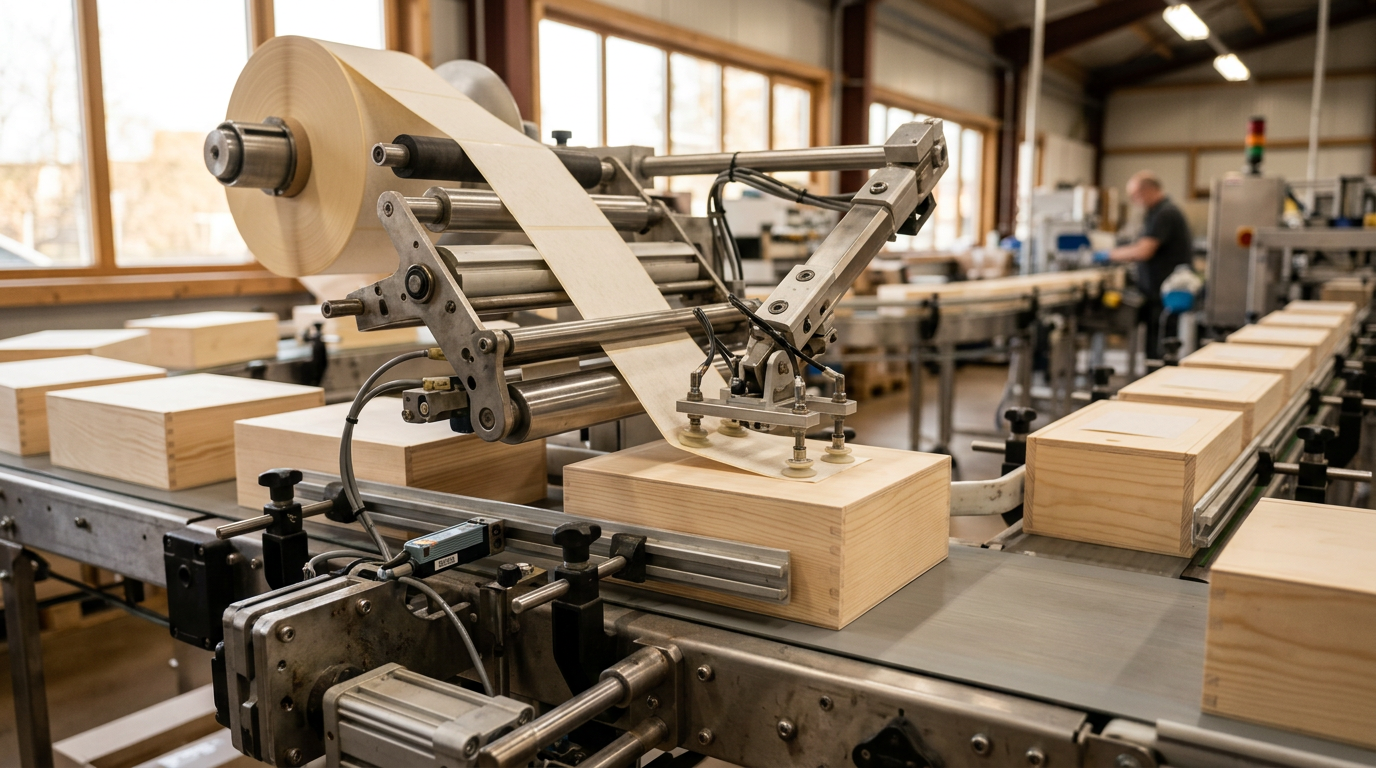
The Labeling Machine: Optimization and Precision in the Packaging Process In the dynamic world of packaging, efficiency and accuracy are critical factors for success. A labeling machine, far from being a simple accessory, stands as a fundamental tool that streamlines the
The Labeler: Optimization and Precision in the Packaging Process
labeler
The essential
Labelers are crucial for efficiency and branding in packaging.
They range from manual models for small volumes to high-speed automatic ones.
The correct choice depends on product type, volume, precision, and budget.
Regulations and sustainability are important factors to consider when labeling.
Origins and Evolution of the Labeler
Key fact
Labeling precision minimizes inventory errors and facilitates product traceability, crucial elements in modern logistics.
Custom wooden boxes
Discover our wooden boxes for packaging, hospitality, events and more. In-house manufacturing and full customisation.
Ideal for small production volumes or very specific applications. Their operation is simple: the label is applied by pressing or rolling the device over the surface. They are economical and portable, but their speed and precision are limited.
Applications: Handmade products, SMEs, prototypes, or labeling of free samples.
Advantages: Low cost, easy to use, portability.
Disadvantages: Slow, operator skill-dependent, less uniformity.
2. Semi-Automatic Labelers
They represent an intermediate step between manual and automatic solutions. They require operator intervention to place the product, but the machine handles the label application. Some versions can print the label before applying it.
Applications: Medium productions, irregularly shaped products, laboratories.
Advantages: Higher speed and precision than manual ones, consistency in application.
Disadvantages: Require an operator, limited speed, less flexibility in some models.
3. Automatic Labelers
Designed for high-volume production lines, these machines fully integrate the labeling process into the manufacturing chain. They are capable of labeling thousands of products per hour with high precision and minimal human intervention. They are often combined with vision systems to verify correct application and legibility.
Advantages: Very high speed and precision, reduced labor, integration into automatic lines.
Disadvantages: High initial investment, require specialized maintenance, less flexible for rapid changes.
Practical tip
For small productions of custom wooden boxes, a semi-automatic labeler can strike a good balance between cost and quality.
Label Application Technologies
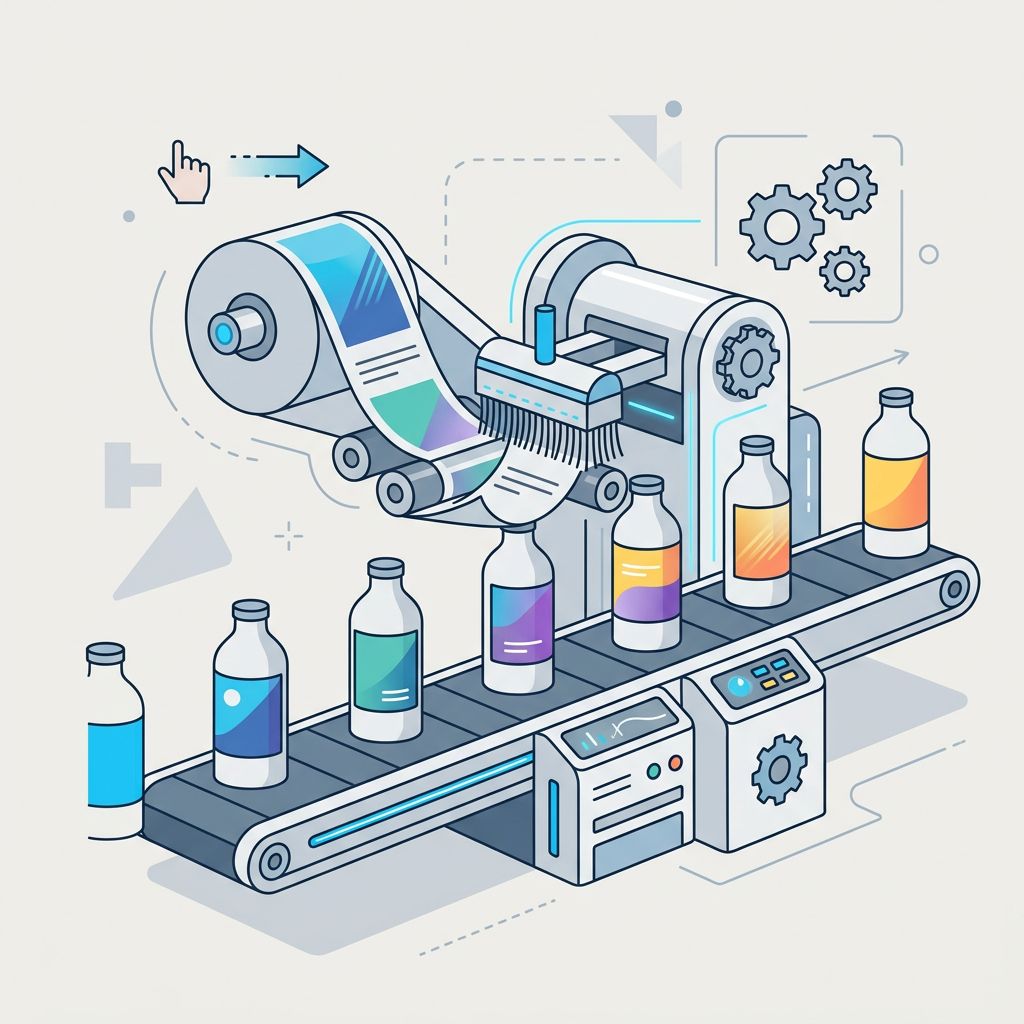
Pressure Sensitive Adhesive (PSA): Self-adhesive labels are the most common. The labeler dispenses and applies them using pressure, rollers, or air. They are versatile and suitable for most surfaces.
Wet Glue: Historically used, these labelers apply an adhesive to the label before fixation. They are common for glass containers, such as wine bottles, and offer great resistance to moisture.
Shrink Sleeve: These are not traditional labels, but plastic sleeves that contract with heat to fit the product's shape, covering all or most of its surface. They offer a large design area and protection.
In-Mold Labeling (IML): The label fuses with the container during the molding process, resulting in a seamless product with no visible label edges, very resistant and with a premium finish.
VersatilityAdaptability to different shapes and materials.
PrecisionExact placement to comply with regulations and aesthetics.
SpeedSignificant increase in production.
TraceabilityFacilitates product and batch tracking.
Key Factors When Selecting a Labeler
Choosing a labeler should not be taken lightly, as an incorrect decision can lead to inefficiencies and high costs. Here are the main factors to consider:
Production volume. This is the most determining factor. For low production, a manual or semi-automatic solution may be sufficient. For large volumes, investment in an automatic one is indispensable.
Product and packaging type.
Shapes: Cylindrical, flat, conical, or irregularly shaped containers require different application technologies.
Materials: Labels for cardboard, glass, plastic (such as polypropylene), metal, or wood require specific adhesives and application systems.
Fragility: Delicate products may require gentle application systems.
Precision and finish. Is label alignment critical? Is a bubble-free or wrinkle-free finish needed? Precision is fundamental for brand image, especially in premium products or surprise boxes.
Label type. Self-adhesive, pre-printed, in-line printed (using direct thermal, thermal transfer, or inkjet printing), wrap-around, or with variable information. Some labelers can also incorporate overprinting systems.
Additional functionalities.
Container detection: Sensors to ensure correct product positioning.
Label verification: Vision systems to ensure legibility of barcodes or dates.
Integration with production lines: Ability to synchronize with other machines.
In-line printing: Print variable information (dates, batches, barcodes) at the time of application.
Budget. Investment can range from a few hundred euros for manual models to hundreds of thousands for complex automatic systems. It is crucial to balance initial investment with long-term efficiency and return.
Maintenance and support. The availability of spare parts, technical service, and training for operators is vital to ensure operational continuity.
Sustainability. The trend towards more ecological packaging also affects labelers. Equipment is sought that minimizes label and adhesive waste, is energy efficient, and can handle labels made from recycled or compostable materials.
>99%Accuracy in automatic
500Products/min (high speed)
24/7Continuous operation
Ergonomic and Safety Considerations
As with any industrial equipment, ergonomic and safety considerations are fundamental.
Safe design: Protection of moving parts, accessible emergency stop buttons, and clear signage.
Hygiene: In industries such as food or pharmaceuticals, equipment made with appropriate materials and easy to clean is required.
Noise: Quieter machines improve the work environment.
Ease of use: Intuitive interfaces reduce the learning curve and the risk of errors.
The Labeler in the Context of Premium and Gift Packaging
In the luxury or gift packaging sector, such as wooden boxes or solutions for wedding packaging, the labeler plays an even more delicate role. The label is not just an information carrier, but an extension of the design and brand experience.
In premium packaging, the label is the final seal, the silent promise of what lies within.
Here, millimeter precision is crucial so as not to distort the aesthetics. A crooked, bubbly, or poorly adhered label can devalue the perception of a high-value product. Some specialized labelers can handle labels with special finishes, such as embossing, hot stamping, or metallic details, ensuring they are applied without damage and retaining their visual appeal.
For personalized packaging, such as boxes for communions, labelers with the ability to print variable data in-line are very useful. This allows adding names, dates, or personalized messages to the labels just before their application, streamlining the process and maintaining a high level of customization without sacrificing efficiency.
Regulations and Labeling
Labeling is subject to strict regulations in many sectors, especially in food, pharmaceuticals, and cosmetics. A labeler must be able to comply with these requirements, which often include:
Mandatory information: Ingredients, expiration date, batch, allergens, origin, etc.
Legibility: Font size, contrast, and print clarity.
Location: Some regulations specify where certain information should go on the package.
Failure to comply with these regulations can lead to significant fines and product recalls, underscoring the importance of a reliable and precise labeler.
Important note
Correct printing and application of EAN codes on labels is fundamental for inventory management and points of sale.
Future Trends in Labeling
The labeler sector continues to evolve, driven by the demand for greater efficiency, sustainability, and personalization:
Artificial Intelligence and Machine Learning: Improves precision, predicts failures, and optimizes machine configuration for different products.
Modular systems: Labelers that can be easily configured and reconfigured to adapt to various products and production requirements.
Sustainability: Development of equipment that handles linerless labels, reducing material waste, or that uses biodegradable adhesives.
Robotics: Integration of robotic arms for label application on complex shaped products or in difficult environments.
IoT Connectivity: Remote monitoring, predictive diagnostics, and data collection for process optimization.
The labeler is much more than a machine that sticks an adhesive. It is a central piece in the packaging value chain, influencing operational efficiency, brand image, regulatory compliance, and customer experience. Its correct selection and integration is a strategic investment that directly impacts the competitiveness and success of any product in the market.
Frequently asked questions
What kind of labeler do I need for a small business?
For a small business, a manual labeler is the most economical starting point for very low volumes. If production grows, a semi-automatic labeler offers a good balance between cost, speed, and precision, being ideal for medium to low productions. The final choice will depend on the exact volume, product type, and budget.
Can labelers handle different container shapes?
Yes, there are specialized labelers for various container shapes. Labelers for flat containers are common, while those for cylindrical containers use rollers. For conical, oval, or irregular shapes, semi-automatic systems with templates or automatic machines with vision technologies and robotic arms that adapt to the product's geometry are often used.
What maintenance does a labeler require?
Maintenance varies depending on the type and complexity of the machine. Generally, it includes regular cleaning of the printheads (in models with printing), checking and adjusting sensors, lubricating moving parts, and periodic replacement of wear parts such as rollers or blades. It is essential to follow the manufacturer's recommendations to ensure a long lifespan and optimal operation.
How does the labeler influence packaging sustainability?
A labeler can contribute to sustainability in several ways: by using linerless labels that reduce waste, optimizing energy consumption, or minimizing application errors that lead to product spoilage. Furthermore, the ability to apply labels made from recycled or biodegradable materials is a key factor in the production of more eco-friendly packaging.
Can labelers print variable information?
Yes, many modern labelers, especially semi-automatic and automatic ones, integrate in-line printing systems. These can be thermal transfer, direct thermal, or inkjet, and allow printing variable data such as expiration dates, batch numbers, barcodes (as described for traceability in packing list) or QR codes directly on the label before its application, ensuring that the information is always up-to-date and relevant.
We use our own and third-party cookies to improve your experience, analyze traffic and show relevant advertising. You can accept, reject or customize your preferences.