Picking and Packing: Optimizing Order Preparation and Shipping
The essentials
- Picking and packing are crucial for customer satisfaction, operational costs, and brand reputation.
- Picking involves selecting products, with strategies ranging from manual "Person-to-Goods" to automated "Goods-to-Person" systems.
- Packing protects products and enhances brand experience, requiring careful material selection and customization.
- Avoiding errors and embracing sustainability are key for efficient and successful picking and packing operations.
What is Picking? Types and Strategies
"Person-to-Goods" vs. "Goods-to-Person" Picking
"Person-to-Goods"
Operators move through the warehouse to collect items.
- Discrete, batch, zone, and wave picking.
- Examples: manual retrieval.
"Goods-to-Person"
Technology brings products directly to operators.
- Reduces travel time and increases efficiency.
- Higher investment but offers high efficiency and error reduction.
Picking Strategy Tip
The best picking strategy depends on your specific business needs, considering order volume, product types, and warehouse layout. Evaluate each method's pros and cons carefully.
Support Technologies in Picking
- Pick-by-Light. Lights and LED displays guide the operator to the exact location and show the quantity to be picked. It is very precise and fast.
- Pick-by-Voice. The operator receives instructions through headphones and confirms actions using voice commands. It frees the operator's hands and eyes.
- RFID (Radio Frequency Identification). Allows wireless and automatic identification and tracking of products, improving inventory management and accuracy.
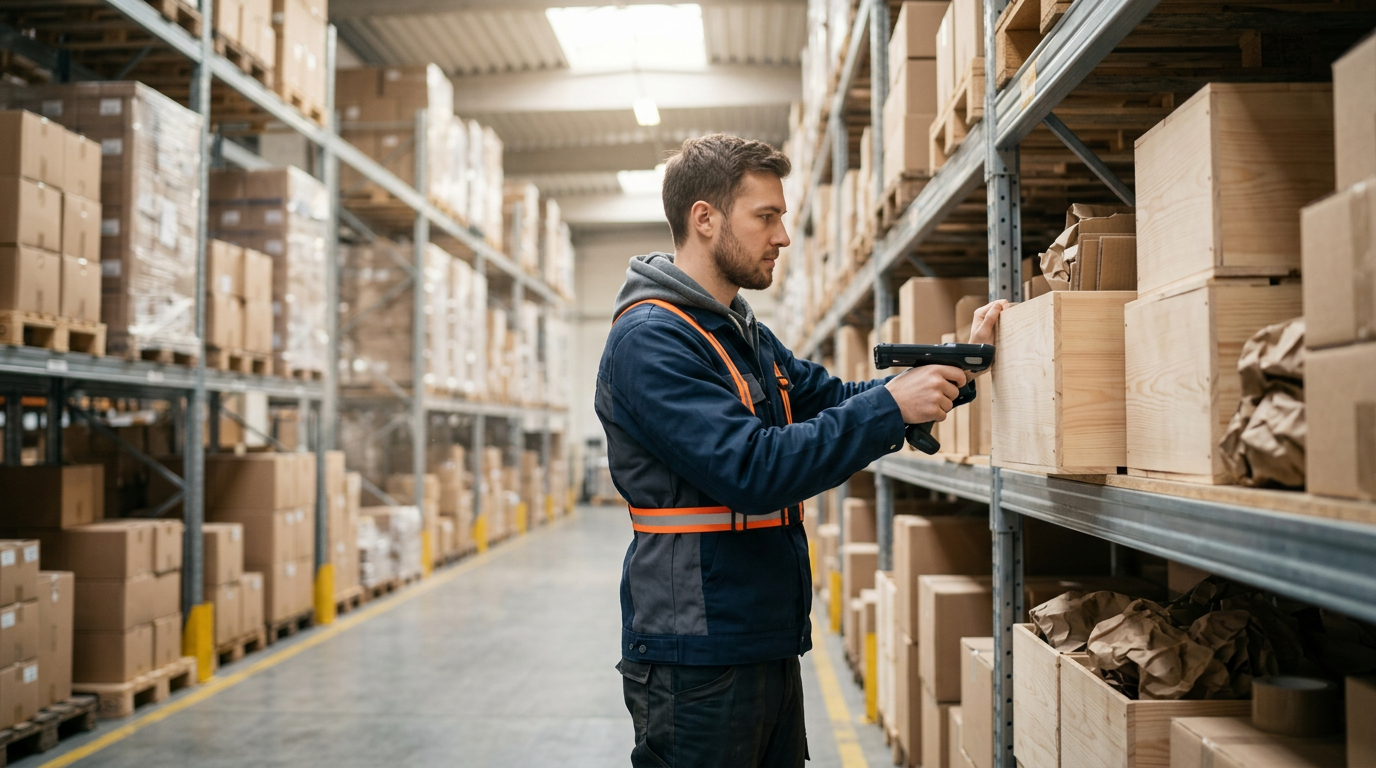
- Barcode and QR code readers. Standard tools for accurate product and location identification.
- Warehouse management systems (WMS). Software that optimizes all warehouse operations, including assigning the most efficient picking routes.
Packing: Protecting and Presenting the Product
Packaging and Protection Materials
Primary and Secondary Packaging
- Primary packaging: The packaging that is in direct contact with the product. It can be a simple bag, a small box, or a jar. Its main function is to protect the product and, in many cases, present it to the final consumer, such as custom wooden boxes for wine bottles or gourmet products.
- Secondary packaging: The packaging that contains one or more products, whether in their primary packaging or not. For example, a cardboard box containing several units of a product. It is often used to group, protect, and facilitate the transport of products.
Materials for Outer Packaging and Protection
- Cardboard. The most common material for shipping boxes, including corrugated and kraft varieties.
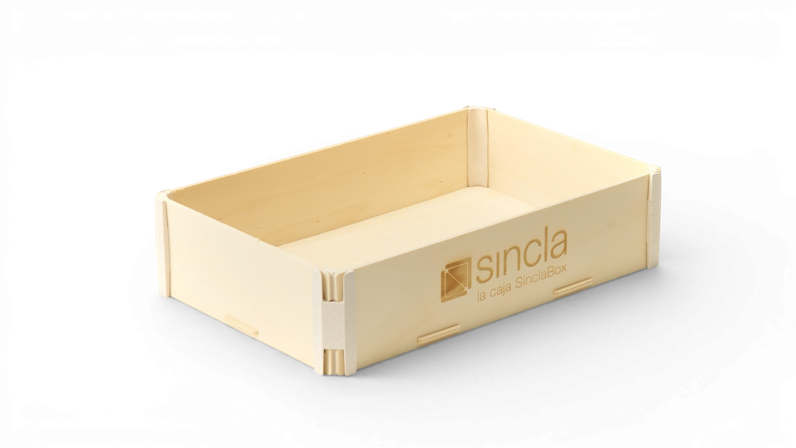
- Wood. For premium, heavy, or very fragile products, or where aesthetics are key, offering maximum resistance and a luxurious appearance. Includes solid wood, plywood, and MDF.
- Filling and protective materials. Bubble wrap, polyethylene foam, paper fill, packing peanuts, and dividers.
- Packing tapes. Essential for securely sealing boxes, made of polypropylene, PVC, or reinforced kraft.
Customization and Finishes in Packaging
- Printing and screen printing: Directly on the material (cardboard, wood), allows adding logos, graphics, or product information.
- Laser engraving: Especially popular on wood, it offers a premium and durable finish, ideal for personalized logos or messages on wooden boxes.
- Pad printing: Allows printing on irregular surfaces, useful for small or complex-shaped objects.
- Hot Stamping: Applies metallic (gold, silver) or colored foils using heat and pressure, creating a shiny, high-quality effect, widely used in premium gift packaging.
- Custom labels: A versatile and economical option for adding information, branding, and an aesthetic touch.
- Eco-friendly inks: The trend towards sustainability drives the use of water-based or vegetable-based inks.
Common Picking and Packing Errors to Avoid
Errors in picking and packing directly affect customer satisfaction, operational costs, and brand reputation. Careful attention to detail can prevent significant financial losses and maintain customer loyalty.
- Picking errors:
- Incorrect picking: The wrong product is selected.
- Incorrect quantity: A different quantity than requested is selected.
- Damage during picking: The product is damaged during handling in the warehouse.
- Lack of route optimization: Operators travel unnecessary distances.
- Inaccurate inventory: Poor stock management leads to erroneous selections or orders that cannot be fulfilled.
- Packing errors:
- Inadequate packaging: Using a box that is too large or too small, or insufficient protective material, resulting in damage or excess cost.
- Insufficient protection: Not adequately protecting fragile products.
- Incorrect labeling: Errors in the address, barcode, or package information.
- Excessive packaging: Using more material than necessary, increasing costs and waste.
- Lack of branding: Not taking advantage of packaging as an opportunity to reinforce the brand. A custom box can dramatically change customer perception, as detailed in Custom box vs. standard packaging: why your brand needs it?.
Picking and Packing in the Context of Sustainability
FSCCertified wood
100%Recyclable
3 kgTypical load
- Space optimization: Designing packaging to occupy the least possible space, reducing the volume of shipments and, therefore, the carbon footprint of transport.
- Recycled and recyclable materials: Using recycled kraft cardboard, biodegradable shredded paper, starch packing peanuts, and recycled plastics. Understanding Recycling symbols in packaging: meaning and application is key.
- Waste reduction: Minimizing the use of single-use materials, opting for compostable or reusable packaging.
- Responsible suppliers: Working with manufacturers who employ sustainable practices, such as the use of FSC-certified wood for wooden boxes.
- Innovation in design: Developing packaging that requires less material or can have a second useful life.
The Role of Packing in the Premium and Gift Customer Experience
Packaging is not just protection; it is an integral part of the brand experience and a key component of customer satisfaction.
- First impression: Carefully designed and well-executed packaging creates an impactful first impression, reinforcing the perceived value of the gift.
- Elements that add value:
- Wooden boxes with special finishes: Laser engraving, hot stamping, magnetic closures, or fabric ribbons.
- High-quality fillers: Wood shavings, silk, or personalized tissue paper.
- Greeting cards or personalized messages: Add a personal touch.
- Wax seals or ribbon bows: Details that evoke tradition and exclusivity.
- "Unboxing" as an experience: In the era of e-commerce and social media, unboxing a product has become an event in itself. Well-thought-out packaging encourages customers to share their experience, generating organic advertising and strengthening loyalty. This aspect is vital for industries such as gifts or gourmet products. Inspiring ideas on 10 catering presentation ideas with wooden boxes show this potential.
- Suitability for the event: Packaging for special events such as wedding packaging or communion boxes must reflect the tone and aesthetics of the event, integrating with the celebration.