Tissue Paper: Beyond a Simple Wrapping
The Essentials
- Tissue paper is a lightweight and versatile material, essential in premium packaging and decoration.
- It offers surface protection against scratches and adds aesthetic value to wrapping.
- There are various types depending on their grammage, finish (matte, glossy), and composition (virgin, recycled).
- Sustainability and personalization are key factors in its selection and application.
Origins and Evolution of Tissue Paper
Intrinsic Characteristics of Tissue Paper
Lightness and Flexibility
Texture and Feel
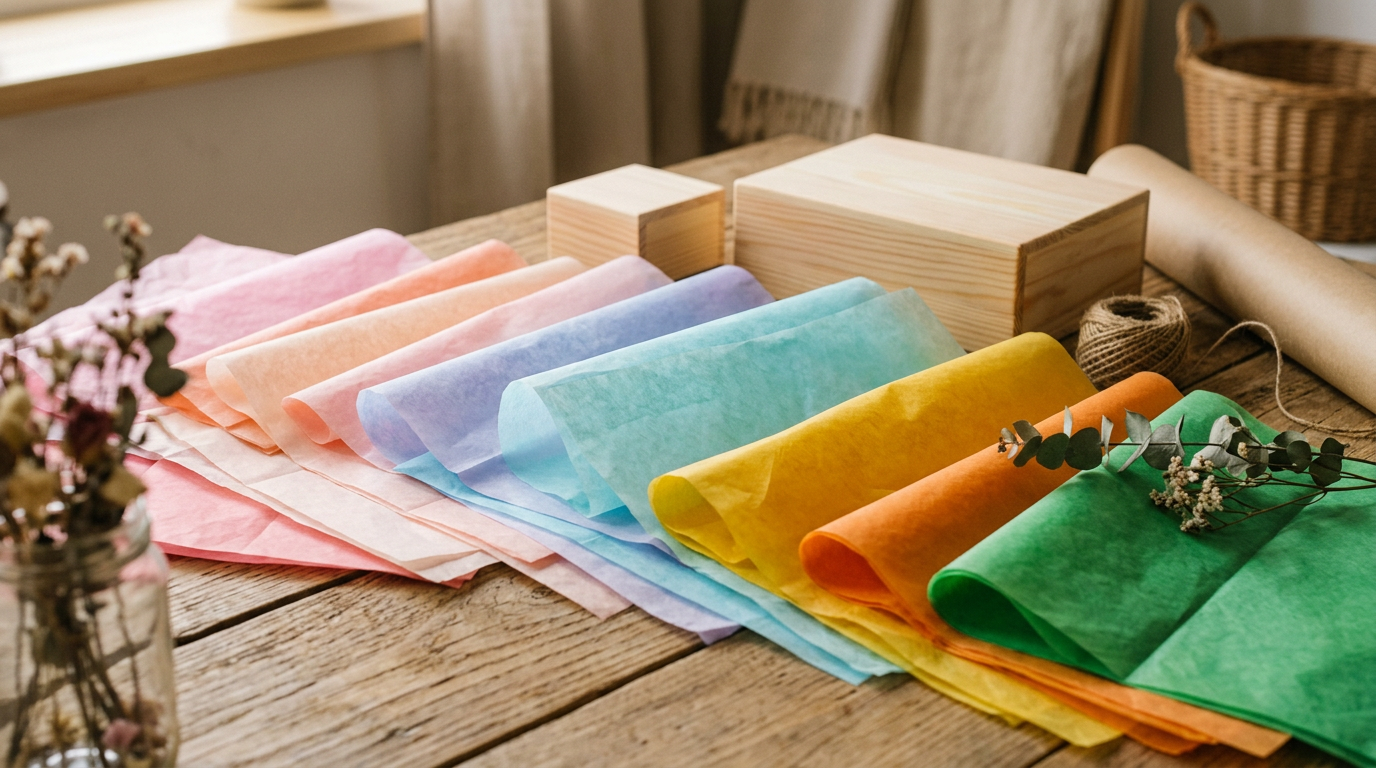
Color Variety and Finishes
Grammage and its Importance
The grammage of tissue paper (expressed in g/m²) directly influences its strength and opacity. Lower grammages (17-20 g/m²) are ideal for an ethereal and light effect, while higher grammages (up to 30 g/m²) offer greater opacity and tear resistance.
Key Applications of Tissue Paper
Premium and Luxury Packaging
custom wooden boxesPacking and Protection
bubble wrapDecoration and Presentation
Gifts and Events
wedding packaging- Delicate ProtectionPrevents scratches and scuffs on sensitive surfaces.
- Enhanced AestheticsAdds a touch of luxury and sophistication to packaging.
- Unboxing ExperienceContributes to a memorable and satisfying opening.
- Creative VersatilityIdeal for crafts, decoration, and gift personalization.
Types and Variants of Tissue Paper
According to its Composition
The base of the tissue paper can vary:
- Virgin fiber: Made from new wood pulp, it offers maximum quality, strength, and color consistency. It is the most common type for premium uses.
- Recycled fiber: Produced from recycled paper, it is a more sustainable option. Although it may have slightly lower strength and a somewhat more limited color palette or a more rustic finish, its environmental impact is lower.
According to its Grammage and Finish
Grammage is key, as mentioned. Regarding finishes:
- Matte: This is the most traditional, with a non-reflective surface that absorbs light.
- Satin/Slightly glossy: Offers a subtle sheen that can enhance certain colors or add a touch of sophistication.
- Metallic: With incorporated metallic particles that give it a shiny and luxurious look, ideal for special occasions.
- Printed/Textured: Features printed patterns or embossed textures that add an additional visual and tactile element.
Anti-Fungal and Anti-Tarnish Tissue Paper
Smart Selection
When choosing tissue paper, consider not only the color and grammage, but also whether special properties such as moisture resistance or anti-tarnish protection are relevant for the product to be wrapped. This ensures maximum protection and presentation.
Personalization and Branding with Tissue Paper
Printing Logos and Designs
Corporate Colors
Considerations for Personalization
- Size and placement of the design: It should be visible but not overwhelming.
- Print quality: Ensure that colors and details are sharp and true to the brand image.
- Cost: Personalization increases the cost per sheet, but the return in terms of branding usually justifies the investment.
Sustainability and Tissue Paper
Sustainable Materials and Processes
- Recycled fibers: Opting for tissue paper made with a high percentage of recycled fibers minimizes the use of virgin resources and reduces waste.
- FSC/PEFC certifications: These certifications guarantee that the pulp used comes from responsibly managed forests.
- Eco-friendly inks: The use of water-based or vegetable-based inks in printing reduces the chemical footprint of the product.
Biodegradability and Compostability
Reduction of Plastic Use
Common Mistakes and Practical Tips
Mistakes to Avoid
- Using the wrong grammage: Paper that is too thin can tear easily or not offer enough opacity, while paper that is too thick can lose its delicacy.
- Ignoring color transfer: Some intensely colored tissue papers can transfer pigment if they come into contact with moisture, damaging the product. It is crucial to use "colorfast" paper for sensitive products or in humid environments.
- Overdoing the quantity: Using too much paper can look messy and generate unnecessary waste. Measured and aesthetic use is key.
Tips for Optimal Use
- Folding and crumpling strategically: Experiment with different folding techniques (tight wrapping, gentle crumpling to create volume) to achieve the desired effect.
- Combining colors: Use layers of different colored tissue paper to create a striking visual effect and a personalized touch.
- Accompany with other materials: Combine tissue paper with fabric ribbons, personalized labels, or wax seals for an even more premium finish.
- Proper storage: Store tissue paper in a dry place away from direct sunlight to preserve its colors and prevent it from deteriorating.
Pigment Quality
When selecting colored tissue paper, especially for light-colored clothing items or products that may get damp, it is essential to check colorfastness to avoid unwanted transfer that could stain or damage the final product.
Future Perspectives of Tissue Paper
- Greater sustainability: Development of tissue papers with a higher percentage of recycled material, certified compostable options, and manufacturing processes with lower energy and water consumption.
- New functionalities: Possible treatments to improve water resistance, antibacterial properties, or even smart capabilities to interact with devices.
- Variety of finishes: Exploration of new textures, embossed patterns, and visual effects that enhance appeal and tactile experience.